Plantain Herb – Foraging Guide & How to use this plant
The ultimate guide to foraging for plantain herb. Learn how to identify, harvest, and use plantain herb for natural remedies and nutritious meals.
Plantain herb is often overlooked as a mere weed, but it’s a real powerhouse of medicinal properties and nutritional benefits. I’ve been foraging for plantain herb as long as I can remember, often using it for minor skin cuts and to drink it as a tea.
In this blog post, I’ll guide you through the essentials of foraging for plantain herb, including how to identify the different species, the best times to harvest, and practical tips for using this remarkable plant in your everyday life.
MORE FORAGING GUIDES
- Rowan Berries: Foraging Guide & Recipe Ideas >>
- The complete guide to foraging for white mistletoe >>

Plantain herb plant – common name & latin name
The plantain herb, commonly known as broadleaf plantain or greater plantain, is scientifically named Plantago major. This perennial species is native to Europe and certain parts of Asia but has become widespread across the world, thriving in lawns, fields, and along roadsides.
It is recognized for its broad, oval leaves that grow in a rosette pattern close to the ground. The plant has a long history of use in traditional medicine for its anti-inflammatory and wound-healing properties. Its name is derived from the Latin word “planta,” which means “sole of the foot,” alluding to the shape of its leaves.
MORE FORAGING GUIDES
Where to find plantain herb as native plant
The plantain herb, specifically Plantago major, is not native to North America but is native to Europe and parts of Asia. However, other species of plantain that are native to North America include Plantago rugelii (Rugel’s plantain) and Plantago virginica (Virginia plantain).
These native species can be found in various habitats such as meadows, prairies, and open woodlands across the eastern and central United States. They typically grow in areas with disturbed soils and can often be found along roadsides, in fields, and in other open areas.

The main types of plantain herbs
There are over 200 species of the plantain herb within the Plantago genus. Some of the most common types include Plantago major (broadleaf plantain), Plantago lanceolata (ribwort plantain), Plantago coronopus (buck’s-horn plantain), and Plantago virginica (Virginia plantain).
Each species varies slightly in appearance, habitat preference, and uses, but they generally share similar medicinal properties and growth patterns.
Where to find plantain herb in UK
In the UK, plantain herb (Plantago major and Plantago lanceolata) can commonly be found in various natural habitats
Gardens and Lawns: Often considered a weed, plantain can be found in many gardens and lawns throughout the UK.
Roadsides and Pavements: It thrives in disturbed soils, making roadsides and pavements common places to find it.
Meadows and Fields: Plantain grows well in open, grassy areas such as meadows and fields.
Parks and Public Spaces: Urban parks and other public green spaces are also common habitats.
MORE FORAGING GUIDES
- White Dead Nettle: Foraging Guide & Recipe Ideas >>
- Raspberry Leaves: Foraging Guide + Tea & Tincture Recipes >>
Growing season for plantain herb
The growing season for wild plantain herb (Plantago major and other species) typically spans from early spring to late autumn. In early spring, after the last frost, plantain seeds naturally germinate and begin to grow actively throughout the spring and summer.
These herbs thrive in a variety of conditions, including full sun to partial shade and different soil types. Leaves can be harvested throughout the growing season, from late spring to early autumn, as they reach a suitable size.
The plant produces flowers and seeds from late spring to early autumn, with peak flowering usually occurring in the summer. Wild plantain is hardy and resilient, making it a common and easy-to-find plant in various natural habitats.
How to identify plantain herb
To identify wild plantain herb, particularly the two main species—broadleaf plantain (Plantago major) and narrowleaf plantain (Plantago lanceolata)—look for the following characteristics:
Broadleaf Plantain (Plantago major)
- Leaves: Broad, oval-shaped leaves that grow in a rosette pattern close to the ground. The leaves are smooth-edged and have prominent, parallel veins.
- Size: Leaves can range from 5 to 20 cm long and 4 to 9 cm wide.
- Flower Stalks: Tall, slender stalks that rise from the center of the rosette, topped with small, inconspicuous greenish flowers.
Narrowleaf Plantain (Plantago lanceolata)
- Leaves: Long, lance-shaped leaves that are much narrower than those of broadleaf plantain. They also grow in a rosette pattern and have prominent parallel veins.
- Size: Leaves are typically 10 to 30 cm long and 1 to 3 cm wide.
- Flower Stalks: Slender stalks similar to those of broadleaf plantain, but often shorter, topped with a dense spike of small, brownish flowers.
Are there any plants that look like plantain?
While plantain herbs (Plantago major and Plantago lanceolata) are relatively easy to identify, there are a few plants that might be confused with them. However, most of these look-alikes are not poisonous. Lily of the Valley is a notable exception, as it is highly toxic and should be avoided
1. Lamb’s Quarters (Chenopodium album)
- Leaves: Similar broad, oval leaves, but they are toothed and have a powdery coating, especially on the underside.
- Growth Habit: Grows upright rather than forming a rosette.
- Poisonous: No, it is edible and often used as a leafy green.
2. Dock (Rumex spp.)
- Leaves: Broad, oval leaves with wavy or slightly toothed edges, and a rosette growth pattern.
- Growth Habit: Leaves are generally larger and more elongated.
- Poisonous: No, but some species can be mildly toxic if consumed in large quantities due to oxalic acid content.
3. Mullein (Verbascum thapsus)
- Leaves: Large, oval, and covered with soft, fuzzy hairs, forming a rosette.
- Growth Habit: Leaves are much more velvety and larger than plantain.
- Poisonous: No, it is not poisonous and is often used medicinally.
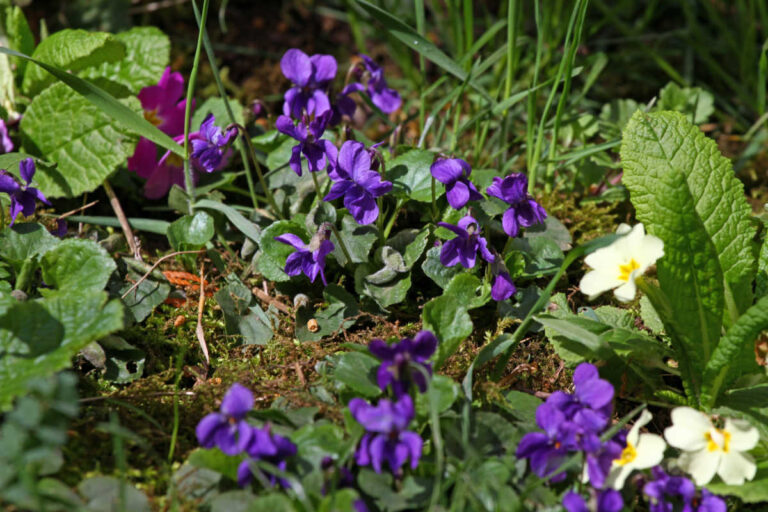
4. Wild Violet (Viola spp.)
- Leaves: Heart-shaped to rounded leaves with a slight resemblance to young plantain leaves.
- Growth Habit: Forms a low-growing mat rather than a rosette.
- Poisonous: No, wild violets are edible and often used in salads.
5. Lily of the Valley (Convallaria majalis)
- Leaves: Broad, oval leaves that can resemble plantain when young.
- Growth Habit: Grows in pairs or clusters, not in a rosette.
- Poisonous: Yes, it is highly toxic if ingested.
MORE FORAGING GUIDES
Medicinal properties of plantain herb
Anti-Inflammatory: Plantain contains compounds like aucubin and flavonoids, which have anti-inflammatory effects, making it useful for reducing swelling and inflammation.
Antimicrobial: The herb has antimicrobial properties that help combat infections caused by bacteria, viruses, and fungi.
Wound Healing: Plantain promotes wound healing due to its astringent properties, which help to contract and tighten tissues, and its ability to stimulate cell growth and repair.
Antioxidant: Rich in antioxidants, plantain helps to neutralize free radicals and protect cells from damage.
Demulcent: It soothes irritated mucous membranes, making it effective for treating respiratory and digestive issues.
MORE FORAGING GUIDES
Plantain use as a natural remedy at home
Wound Healing: Fresh plantain leaves can be crushed or chewed and applied directly to cuts, scrapes, insect bites, and stings to reduce pain, swelling, and promote faster healing.
Skin Irritations: Plantain can be used to soothe skin conditions such as eczema, psoriasis, and dermatitis. A poultice or salve made from plantain leaves can be applied to the affected area.
Cough and Respiratory Issues: Plantain tea or syrup can be used to relieve coughs, bronchitis, and sore throats. Its demulcent properties help to soothe and protect the respiratory tract.
Digestive Health: Drinking plantain tea can aid in treating digestive issues such as diarrhea, gastritis, and peptic ulcers by soothing and healing the mucous membranes of the digestive tract.
Urinary Tract Infections: Plantain’s antimicrobial and anti-inflammatory properties can help alleviate symptoms of urinary tract infections when consumed as a tea.
How to prepare plantain home remedies
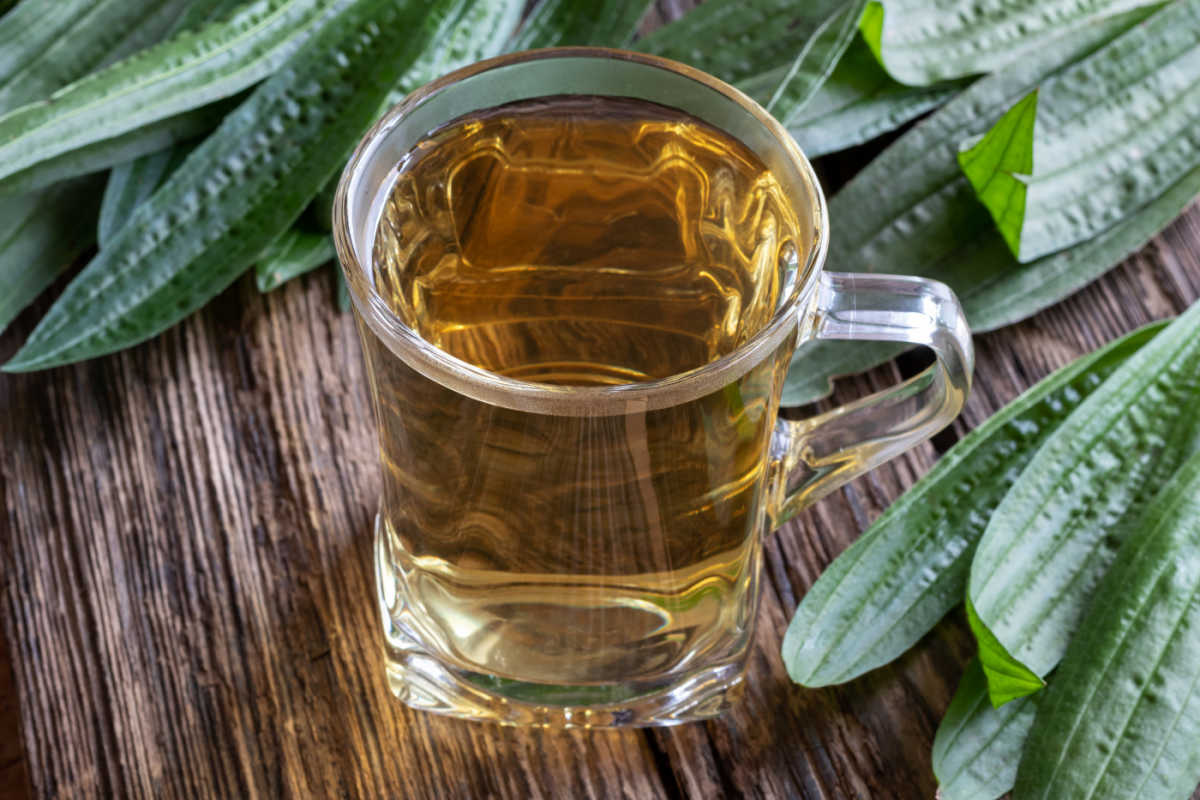
Plantain Tea: Steep 1-2 teaspoons of dried plantain leaves in a cup of boiling water for 10-15 minutes. Strain and drink up to three times a day.
Poultice: Crush fresh plantain leaves and apply the paste directly to the affected area. Cover with a clean cloth or bandage and leave for a few hours or overnight.
Salve: Infuse plantain leaves in oil (such as olive or coconut oil) for several weeks, strain, and mix with melted beeswax to create a healing salve.
MORE FORAGING GUIDES
How to harvest plantain
Leaves
- When to Harvest: The best time to harvest plantain leaves is from spring through early autumn, when the leaves are young and tender. For the highest medicinal potency, harvest in the morning after the dew has dried but before the sun is too hot.
- How to Harvest: Use scissors or your fingers to snip the leaves close to the base of the plant. Avoid leaves that are yellowing or damaged.
Seeds
- When to Harvest: Plantain seeds can be harvested in late summer to early autumn, once the flower spikes have matured and turned brown.
- How to Harvest: Collect the seed spikes and allow them to dry. Once dried, you can remove the seeds by rubbing the spikes between your hands or using a sieve.
Roots
- When to Harvest: The roots of plantain can be harvested in late autumn, after the plant has finished its growing cycle and before the ground freezes.
- How to Harvest: Dig around the base of the plant with a small trowel to carefully lift the roots from the soil. Wash and dry them thoroughly before use.
Flowers
- When to Harvest: Plantain flowers can be harvested in late spring to early summer when they are in full bloom.
- How to Harvest: Snip the flower spikes off the plant using scissors or your fingers.
Uses
- Leaves: Fresh or dried leaves can be used to make teas, poultices, and salves for treating wounds, skin irritations, and respiratory issues.
- Seeds: Plantain seeds are rich in mucilage and can be used as a natural laxative or added to foods for their nutritional benefits.
- Roots: The roots can be used in tinctures or decoctions for their medicinal properties, such as treating respiratory and digestive ailments.
- Flowers: The flowers can be used similarly to the leaves, although they are less commonly harvested.
MORE FORAGING GUIDES
How to store and keep plantain herb
Leaves
Drying:
Air Drying: Spread the leaves in a single layer on a drying screen, paper towel, or dish towel. Place them in a well-ventilated area out of direct sunlight. Allow the leaves to dry completely, which can take several days.
Oven Drying: Place the leaves on a baking sheet lined with parchment paper. Set the oven to its lowest temperature (around 50°C or 120°F) and leave the door slightly ajar to allow moisture to escape. Check the leaves regularly until they are crisp and dry.
Dehydrator: Use a food dehydrator set at a low temperature (around 35-45°C or 95-113°F). Spread the leaves on the dehydrator trays and dry until they are crisp.
Storage: Store dried leaves in an airtight container, such as a glass jar, in a cool, dark, and dry place. Properly dried and stored leaves can last up to a year.
Seeds
- Drying:
- Allow the seed spikes to dry completely on the plant if possible. If you need to harvest them earlier, cut the spikes and hang them upside down in a dry, well-ventilated area.
- Once dried, rub the spikes between your hands to release the seeds.
- Storage:
- Store the seeds in an airtight container in a cool, dark, and dry place. They can be used for up to a year or longer if kept properly.
Roots
- Drying:
- Clean the roots thoroughly to remove any soil. Cut them into small pieces to facilitate drying.
- Use an oven or dehydrator set at a low temperature (around 50°C or 120°F) to dry the roots. Alternatively, air dry them in a well-ventilated area.
- Storage:
- Store dried root pieces in an airtight container in a cool, dark, and dry place. They can be used for up to a year.
Fresh Leaves and Roots
- Refrigeration: Fresh leaves and roots can be stored in the refrigerator for short-term use. Wrap them in a damp paper towel and place them in a plastic bag or airtight container. They can last for up to a week.
MORE FORAGING GUIDES
Adding plantain herb to your meals
1. Salads
- Young Leaves: The young, tender leaves of plantain can be added raw to salads. They have a slightly bitter taste, similar to spinach or arugula.
- Preparation: Wash the leaves thoroughly, chop them, and mix them with other salad greens, vegetables, and your favorite dressing.
2. Green Smoothies
- Leaves: Add a handful of fresh plantain leaves to your green smoothie for an extra boost of nutrients.
- Preparation: Blend plantain leaves with fruits like bananas, apples, or berries, and a liquid base such as water, almond milk, or yogurt.
3. Soups and Stews
- Leaves: Plantain leaves can be used like other leafy greens in soups and stews.
- Preparation: Chop the leaves and add them to your soup or stew during the last 10-15 minutes of cooking to preserve their nutrients.
4. Sautéed Greens
- Leaves: Sauté plantain leaves as you would spinach or kale.
- Preparation: Heat a little olive oil or butter in a pan, add minced garlic or onions, and then add the chopped plantain leaves. Sauté until wilted and tender. Season with salt, pepper, and a squeeze of lemon juice.
5. Herbal Tea
- Leaves: Fresh or dried plantain leaves can be used to make a herbal tea.
- Preparation: Steep 1-2 teaspoons of dried leaves or a few fresh leaves in a cup of boiling water for 10-15 minutes. Strain and enjoy. You can add honey or lemon for extra flavor.
6. Pesto
- Leaves: Use plantain leaves as a base for a unique pesto.
- Preparation: Blend plantain leaves with garlic, nuts (like pine nuts or walnuts), Parmesan cheese, olive oil, and a bit of lemon juice. Use it as a sauce for pasta, spread on bread, or as a dip.
7. Stuffed Leaves
- Leaves: Use large plantain leaves to make stuffed leaf rolls.
- Preparation: Blanch the leaves in boiling water for a few seconds to soften them. Fill with a mixture of cooked rice, meat, or vegetables, and roll them up. Steam or bake the rolls until heated through.
8. Chips
- Leaves: Make plantain leaf chips as a healthy snack.
- Preparation: Toss whole or torn leaves with a little olive oil and salt. Spread them in a single layer on a baking sheet and bake at 350°F (175°C) for 10-15 minutes, or until crispy.
Potential issues with using plantain herb
While plantain herb (Plantago major and Plantago lanceolata) is generally safe and has been used for centuries in traditional medicine, there are some considerations to keep in mind.
Allergic reactions, though rare, can occur, causing itching, swelling, or difficulty breathing. It’s crucial to harvest plantain from clean, uncontaminated areas to avoid exposure to pesticides or pollutants.
Consuming large amounts may cause mild digestive issues in some individuals, and plantain can interact with certain medications, particularly those affecting blood pressure or blood clotting.
Additionally, there’s limited information on the safety of plantain during pregnancy and breastfeeding, so it’s best to avoid medicinal amounts unless advised by a healthcare professional. Plantain contains oxalates, which can contribute to kidney stone formation in susceptible individuals, and topical use may cause skin irritation in some people. Always perform a patch test before widespread use.
This blog post was originally written on 31 December 2024 and last updated on 26 August 2026