Parasol Mushrooms: Foraging Guide & Recipes
Finding a Parasol mushroom is a big highlight for any forager, mostly because they are so huge. They are the true giants of the grassy fields; it’s pretty amazing to see a cap the size of a dinner plate sitting on a tall, thin stem.
I always keep an eye out for these in October. They have a great flavour, and because they are so big, just one mushroom can provide a “steak-like” meal for two people. They are also one of my favourites to dry out and keep in the cupboard for later in the year. Whether you find them as tall, open “umbrellas” or as round “drumsticks” before they open up, they are a fantastic and tasty find for your autumn harvest.
FORAGING RESOURCES
- Best foraging books to get you started with wild food >>
- Monthly Foraging Guide – What’s in season now >>
Botanical & Historical Basics
Parasol mushroom – common name & latin name
The Parasol mushroom is scientifically known as Macrolepiota procera. The genus name Macrolepiota literally means “large scale,” referring to the distinctive shaggy flakes on the cap, while procera means “tall,” highlighting its impressive height. Historically, it has been one of the most popular edible wild mushrooms in Europe due to its size and fine nutty flavor.
The main types of Parasols
In the UK, you are likely to encounter two main types within this group:
- The Giant Parasol (Macrolepiota procera): The true giant, often reaching 30cm or more in height. It is a “choice” edible.
- The Shaggy Parasol (Chlorophyllum rhacodes): Slightly smaller and sturdier. While many people eat it, it is known to cause gastric upset in some individuals, and it stains red when cut.
MORE MUSHROOM FORAGING GUIDES
- Saffron Milk Caps: Foraging Guide & Recipe Ideas >>
- The Ultimate Guide to Puffball Mushrooms >>
- Chanterelle Mushrooms: Foraging Guide & Recipe Ideas >>
Where & When to Find It
Where to find Parasols as native fungi
Parasols are native to the UK and temperate regions worldwide. They are saprobic, meaning they live off decaying organic matter in the soil, particularly old grass roots and thatch.
Where to find Parasols in the UK
Look for them in open, sun-drenched areas rather than deep, dark forests:
- Meadows and Pastures: Especially those that haven’t been ploughed for many years.
- Golf Courses and Lawns: They love the short, well-drained grass.
- Woodland Clearings: On the sunny edges of parks or open woods.
- Roadside Verges: They often appear in the long grass alongside country lanes.
Growing season for Parasols
The main season is September to late October. They usually appear in “troops” or large rings after a period of warm, wet weather. In a good October, you can find dozens in a single field.
Identification & Safety
How to identify Parasol Mushrooms
The Giant Parasol has very specific features that make it identifiable:
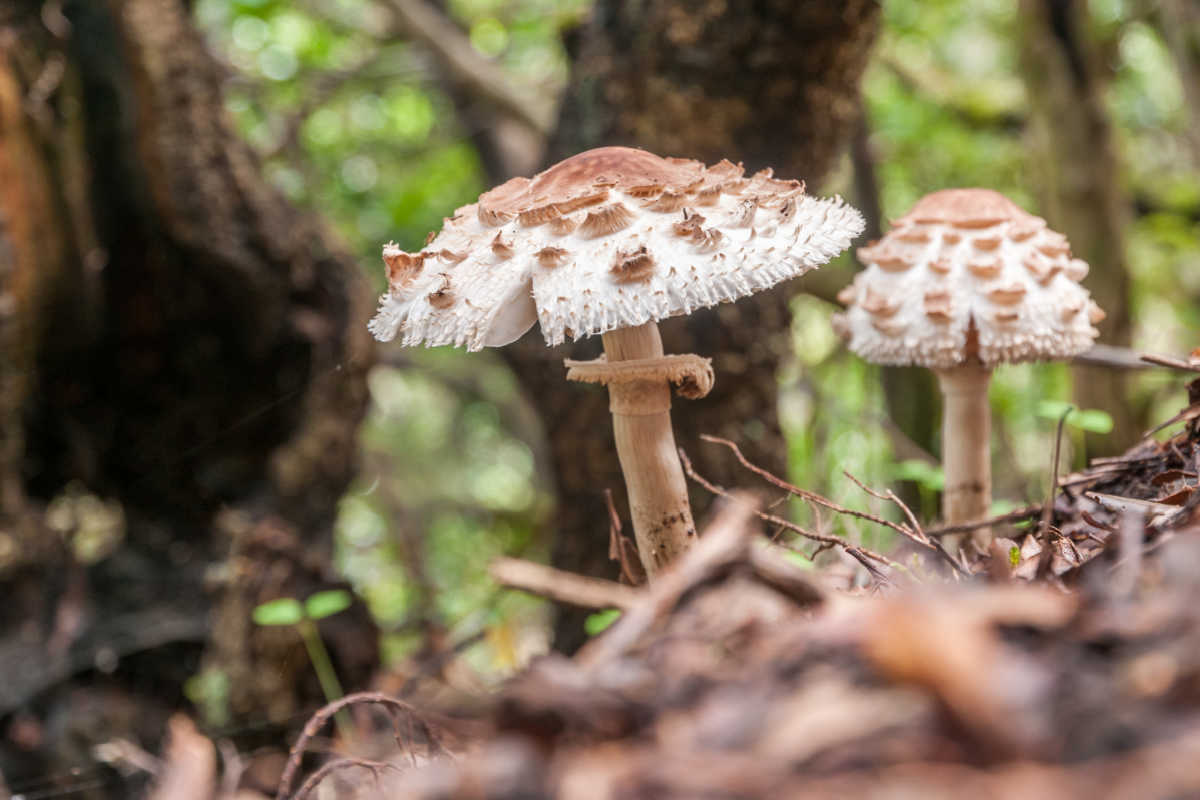
- The Cap: Starts out like a drumstick (round), then expands into a flat “parasol.” It is cream-coloured but covered in coarse, brown shaggy scales.
- The Gills: White to pale cream, very crowded, and free from the stem (they don’t touch the stalk).
- The Stem: Very tall and slender. Crucially, it has a snakeskin pattern (brown zig-zags) on a pale background.
- The Ring: A large, thick, double-edged ring that can actually be slid up and down the stem like a hula-hoop.
Are there any mushrooms that look like Parasols?
Safety is paramount, as there are dangerous look-alikes:
- The Panthercap (Amanita pantherina): This is highly toxic. It is smaller, has white “spots” rather than shaggy scales, and the ring is fixed (it does not slide).
- The False Parasol (Chlorophyllum molybdites): Rare in the UK but moving in due to climate change. It looks very similar but has a green spore print.
The “Snakeskin & Sliding Ring” Test
This is the ultimate test for a true Giant Parasol.
- First: Look at the stem. Does it have the brown, textured “snakeskin” markings? If the stem is smooth or solid white, it is not a Giant Parasol.
- Second: Gently try to move the ring on the stem. If the ring is attached and tears when you move it, be very careful. A true Parasol ring is tough and can be slid several inches up or down without breaking.
Usage & Preparation
Medicinal properties of Parasols
While primarily eaten for food, studies have shown that Macrolepiota procera contains antioxidants and has shown some antibiotic activity in laboratory settings. They are also a good source of protein and B-vitamins.
The Secret to Perfect Texture: The “Stem-less Sauté”
The stems of Parasols are incredibly tough and fibrous (almost like wood). Do not cook the stems. Twist them off and discard them (or dry them to grind into mushroom powder). The caps, however, are soft and spongy. Because they are so large, they act like a sponge for butter and garlic.
Harvesting & Storage
How to harvest Parasols
- The Twist: Since the stems are tough, you can simply twist the whole mushroom out of the ground.
- The Drumstick: If you find them in the “drumstick” stage (before the cap opens), harvest them! They are often considered even more delicious and nutty at this stage.
Ethical Foraging and the “Spore Spread”
If you find an old, flattened Parasol that looks a bit leathery, leave it in the field. Its height allows it to catch the wind perfectly to spread its spores over a wide area.
How to store and keep Parasols
- Fresh: They are best eaten within 24 hours as the gills can turn brown and soft quickly.
- Drying: These mushrooms dry exceptionally well. Sliced caps can be dried and stored in jars for winter stews.
How to Dry Parasol Mushrooms for Winter
1. Prep the Caps (Skip the Stems)
First, twist off the stems. As mentioned before, the stems are very woody and don’t soften when cooked, so we treat them differently. Clean the caps with a soft brush to remove any grass or grit. Do not wash them, or they will take forever to dry and might go mouldy.
2. Slicing for Success
Slice the large caps into strips about 5mm to 1cm thick. Try to keep the slices even so they all dry at the same rate. If you found “drumsticks” (the unopened caps), you can slice these into rounds.
3. Choose Your Drying Method
- The Dehydrator (Best Results): Arrange the slices in a single layer. Set your dehydrator to a low heat (around 40°C to 45°C). It usually takes 6 to 10 hours until they are “cracker dry”—meaning they snap easily when bent.
- The Oven Method: If you don’t have a dehydrator, put the slices on a wire rack over a baking tray. Set your oven to the lowest possible setting (usually 50°C) and leave the door slightly ajar to let the moisture escape. Flip them every hour or so.
- Air Drying: Because October in the UK can be damp, air drying only works if you have a very warm, dry spot (like a shelf above a radiator). String the slices together with a needle and thread and hang them up, ensuring they aren’t touching each other.
4. Don’t Throw Away the Stems!
Even though the stems are too tough to eat, they are full of flavour. Dry the stems until they are rock hard, then whizz them in a blender to create a Parasol Mushroom Powder. This is an incredible “umami” seasoning—you can stir a spoonful into gravies, stews, or even sprinkle it over popcorn.
5. Storage
Once your slices are completely dry and brittle, store them in a clean, airtight glass jar. Keep the jar in a dark cupboard. If stored properly, they will keep their flavour for at least one year.
How to use them later:
When you’re ready to cook, just soak the dried slices in a bowl of warm water for about 20 minutes. They will plump back up, and you can use them in risottos or pasta sauces. Pro tip: Make sure to use the soaking liquid too, as it’s basically a rich mushroom stock!
Culinary Inspiration
- Parasol Schnitzel: This is the classic way to eat them. Coat the massive whole caps in flour, egg, and breadcrumbs, then fry until golden. It tastes like a gourmet veal or chicken escalope.
- Stuffed “Drumsticks”: Stuff the un-opened round caps with garlic butter and herbs, then roast.
- Mushroom Flour: If you have too many, dry the caps and the tough stems separately. Grind the stems into a fine powder to use as an “umami” seasoning for soups.
Safety Precautions
Warning: Only eat the caps. Some people have an allergic reaction to the Shaggy Parasol (Chlorophyllum rhacodes), so if it’s your first time, try a small piece of the Giant Parasol first. Never harvest Parasols that are growing on suspected contaminated land or near heavy traffic, as their large surface area can absorb pollutants.
This blog post was originally written on 24 December 2025 and last updated on 24 December 2025