White Mistletoe – Foraging Guide & How to use this plant
Comprehensive guide to foraging for mistletoe including harvesting and using it as a natural remedy. Learn how to safely identify, collect, and prepare mistletoe for use at home.
Whilst it might look like January is not that great for foraging, it’s still possible to bring interesting plants home, when you decide to go for a winter walk. One of these plants, it’s white mistletoe, which everyone recognises from the festive season, but not a lot of people know, that the plant can be also used as a home remedy.
MORE FORAGING GUIDES
- White Dead Nettle: Foraging Guide & Recipe Ideas >>
- Raspberry Leaves: Foraging Guide + Tea & Tincture Recipes >>
- Gorse Flowers: Foraging Guide & Recipe Ideas >>
Mistletoe name & Latin name
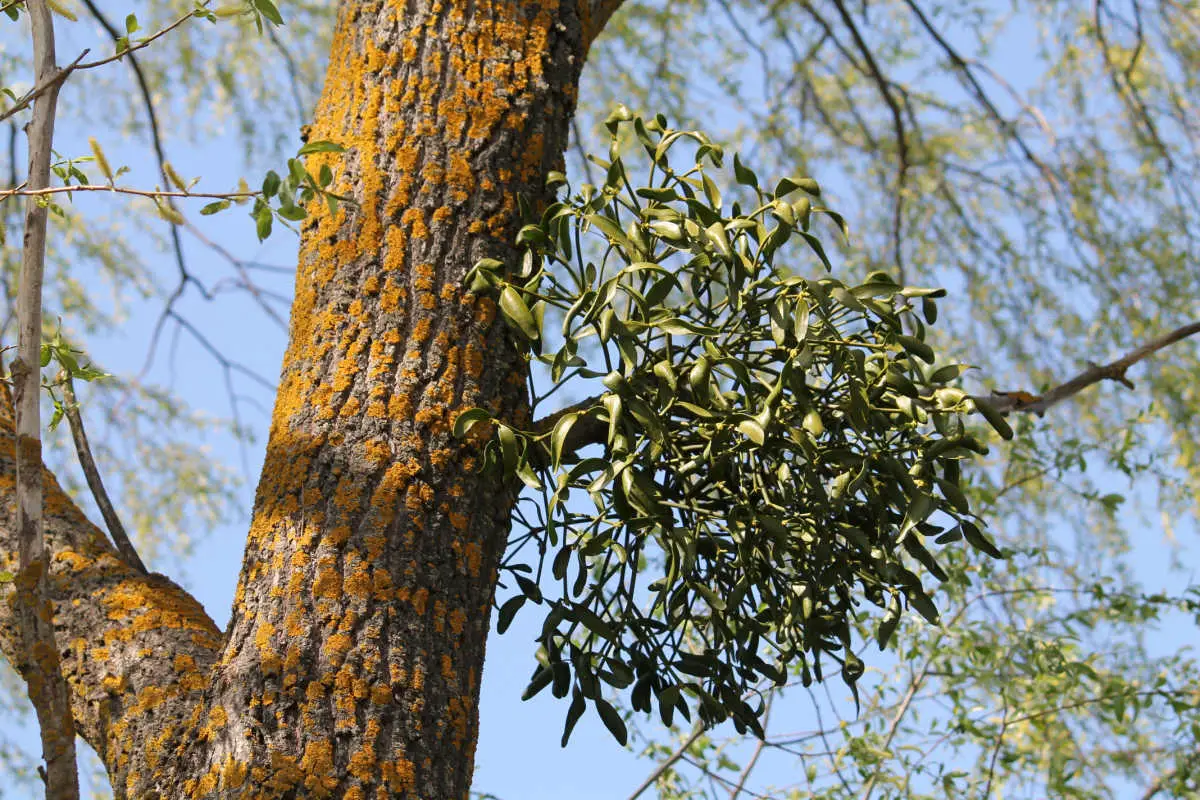
Mistletoe, known scientifically as Viscum album, is a semi-parasitic plant that has captured human imagination and cultural significance for centuries. The name “mistletoe” is derived from the Old English words “mistel,” meaning dung, and “tan,” meaning twig, likely referring to the plant’s method of seed dispersal through bird droppings.
Viscum album is commonly found growing on the branches of various trees, such as apple, oak, and pine, where it derives water and nutrients from its host.
Mistletoe in mythology
Despite its parasitic nature, mistletoe has been revered in folklore and tradition, often symbolizing peace, love, and fertility. Its unique appearance, with evergreen leaves and white berries, makes it a popular decoration during the Christmas season, especially noted for the tradition of kissing beneath it to bring good fortune and romance.

Where to find mistletoe in the countryside
Mistletoe, particularly the species Viscum album in Europe and Phoradendron leucarpum in North America, is commonly found growing on the branches of trees.
This parasitic plant thrives by attaching itself to the host tree’s branches, from which it extracts water and nutrients. In Europe, mistletoe is frequently found on apple trees, poplars, and hawthorns, as well as on lime, maple, and oak trees.
In North America, it often grows on hardwood trees such as oaks, maples, ashes, and even on conifers in some regions.
The plant’s preference for certain types of trees can vary depending on the species of mistletoe and the local environment. For instance, American mistletoe (Phoradendron leucarpum) is commonly seen on deciduous trees, while European mistletoe (Viscum album) can be found on a broader range of hosts, including both deciduous and evergreen trees.
MORE FORAGING GUIDES
When it’s best time to harvest mistletoe ?
Mistletoe, an evergreen plant, has a unique growing season that allows it to remain vibrant throughout the year.
The best time to harvest mistletoe is typically during the winter months, from late November to early March, when its white berries are fully ripe and the plant is most visible on the bare branches of its host trees.
Harvesting during this period ensures that the mistletoe is at its peak in terms of both appearance and potency.
For those looking to grow their own mistletoe, the optimal time to plant the berries is in late winter or early spring, around February to April, when conditions are favorable for germination. The berries should be pressed onto the branches of suitable host trees, where they can adhere and eventually sprout.
MORE FORAGING GUIDES
How to identify mistletoe
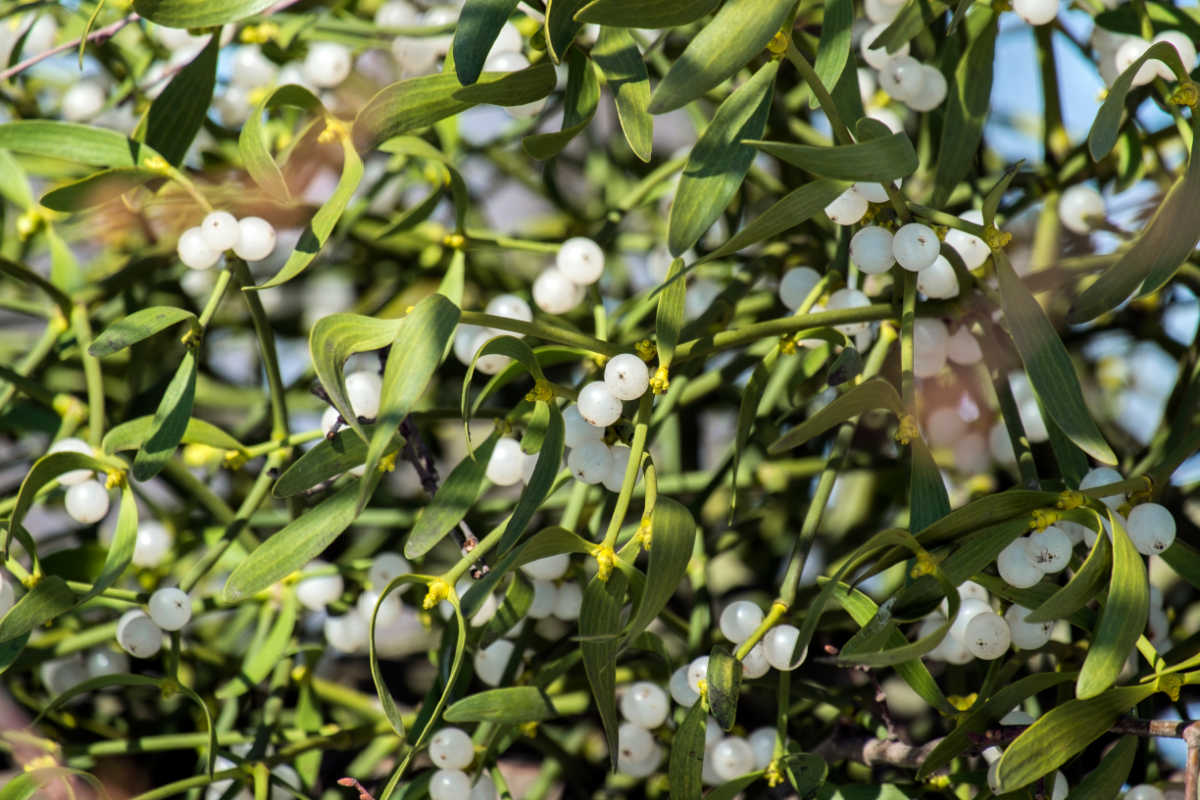
Mistletoe typically forms dense, rounded clusters high up in the branches of host trees, standing out against the bare limbs. The plant has thick, leathery, oval-shaped leaves that are green to yellow-green and grow in pairs along the stem.
Mistletoe also produces small, white, sticky berries that are a key identifier, especially in the winter. These berries are often mistaken for the red berries of holly, but mistletoe berries are white and grow in clusters.
Medicinal properties of mistletoe
Mistletoe has been used for centuries in traditional medicine due to its wide range of purported health benefits. The plant is known for its potential to support cardiovascular health by helping to regulate blood pressure and improve circulation.
Mistletoe extracts are believed to calm the heart and reduce hypertension, making it a valuable remedy for individuals with heart-related conditions.
Mistletoe has anti-inflammatory and immune-boosting properties, which can help in managing autoimmune diseases and enhancing overall immune function.
In herbal medicine, mistletoe is also used to alleviate symptoms of nervous system disorders, such as headaches, dizziness, and epilepsy, due to its mild sedative effects. It has been employed to ease symptoms of menopause, such as hot flashes and mood swings, and to support the function of the thyroid gland.
Mistletoe is being researched for its potential anti-cancer properties; some studies suggest that mistletoe extracts may help inhibit the growth of certain cancer cells and improve the quality of life for cancer patients. However, it is important to note that mistletoe can be toxic in large doses, and its use should always be supervised by a healthcare professional.
MORE FORAGING GUIDES
- Wild Horseradish: Identification, Uses & Recipes >>
- Wild Garlic: Identification, Uses & Recipes >>
- Rosehips: Foraging Guide, Recipes & Nutritional Info >>
How to use mistletoe as a natural remedy at home
Mistletoe Tea: To make mistletoe tea, use dried mistletoe leaves and twigs. Add about one teaspoon of the dried herb to a cup of hot water and let it steep for 5-10 minutes. Strain and drink the tea twice daily to help with blood pressure regulation and to support cardiovascular health. Always consult a healthcare provider before starting any new herbal tea regimen.
Mistletoe Tincture: To prepare a mistletoe tincture, place 150 grams of fresh mistletoe in a jar with a tight-fitting lid and cover it with 500 milliliters of alcohol (such as vodka) so that the plant material is fully submerged. Let the mixture sit in a dark place for about 8 weeks, shaking it occasionally. After this period, strain the liquid, pressing out as much liquid as possible, and store it in a dark bottle. Take 15-20 drops of the tincture diluted in water 2-3 times a day to help with cardiovascular issues and to boost immune function. Again, consult with a healthcare professional before use.
Topical Application: For external use, mistletoe can be made into a poultice or compress to help with varicose veins and joint pain. To make a poultice, crush fresh mistletoe leaves and apply them directly to the affected area, securing with a bandage. Leave it on for several hours or overnight. Alternatively, you can soak a cloth in mistletoe tea and apply it as a compress.
Mistletoe Bath: For a soothing bath that may help with circulatory issues and muscle relaxation, add a few cups of strong mistletoe tea to your bathwater. Soak in the bath for 20-30 minutes.
How to harvest mistletoe
Harvesting mistletoe involves careful planning and safety measures, as the plant often grows high up in the branches of trees. The optimal time to harvest mistletoe is during the winter months, from late November to early March, when the plant is most visible and its berries are fully ripe. To harvest mistletoe, you will need a sturdy ladder or a long pole with a hook or pruning shears. If the mistletoe is growing too high to reach safely, consider seeking assistance from a professional or using tools specifically designed for high branches.
When harvesting, focus on collecting the green, healthy sprigs that include both the leaves and berries. Avoid any parts of the plant that appear blackened or diseased. Cut the sprigs carefully to ensure you do not damage the host tree. The harvested mistletoe can be used fresh or dried for later use.
How to store and keep mistletoe for later use
Proper storage of mistletoe is essential to maintain its freshness and potency for later use. After harvesting, if you plan to use mistletoe within a few weeks, you can keep it fresh by placing the sprigs in a cool, dry place away from direct sunlight.
Hanging the mistletoe upside down in a well-ventilated area can help preserve its appearance and prevent mold growth. Alternatively, you can store fresh mistletoe in the refrigerator, wrapped in a damp paper towel and placed in a plastic bag, to keep it fresh for a longer period.
For long-term storage, drying mistletoe is an effective method. To dry mistletoe, remove any non-green branches and spread the sprigs out in a single layer in a cool, shaded area with good air circulation. Ensure the mistletoe is completely dry before storing it, as any remaining moisture can lead to mold.
Once dried, store the mistletoe in an airtight container, such as a glass jar or a sealed plastic bag, and keep it in a dark, cool place to protect it from light and humidity. Properly dried and stored mistletoe can retain its medicinal properties for several months, allowing you to use it as needed for teas, tinctures, and other remedies. Always label your stored mistletoe with the date of harvest to ensure you use the oldest stock first.
After collecting the twigs, clean them of any non-green branches and then dry them in the shade. You can tell if you have dried the mistletoe properly by its color. Poorly dried mistletoe will turn black and must be discarded.
Caution when foraging for white mistletoe
Mistletoe is not considered edible and can be toxic if ingested in large quantities. All parts of the plant, including the leaves, stems, and berries, contain toxic compounds such as viscotoxins and lectins.
Ingesting mistletoe can cause symptoms like nausea, vomiting, diarrhea, abdominal pain, and in severe cases, cardiovascular issues and seizures. Therefore, it is crucial to avoid consuming mistletoe berries or leaves directly.
When using mistletoe for medicinal purposes, it is important to adhere to recommended dosages and consult with a healthcare professional to avoid potential adverse effects. Pregnant or breastfeeding women, as well as individuals with certain health conditions such as autoimmune disorders or heart disease, should consult a healthcare provider before using mistletoe.
Always handle mistletoe with care, especially if you have children or pets at home. Keep both fresh and dried mistletoe out of reach to prevent accidental ingestion. When preparing mistletoe remedies, use gloves to avoid skin irritation, and wash your hands thoroughly afterward.
This blog post was originally written on 1 January 2025 and last updated on 1 January 2025