Foraging in April – Guide to wild food & Recipes (UK)
April is here, and it’s one of the best times to get outside and start foraging for wild food in the UK. As the days get longer and warmer, the countryside bursts into life with fresh, edible plants just waiting to be discovered.
Whether you’re a seasoned forager or just curious about what tasty treasures you can find in the wild, April offers a bounty of delicious and nutritious options.
In this blog post, we’ll guide you through some of the best wild foods to look for this month, where to find them, and how to enjoy them. April also slightly overlaps with wild plants you can find in March and May, so there is always something interesting I find on my country walks. So grab a basket, put on your walking shoes, and let’s go explore the great outdoors together!
BEGINNERS GUIDE TO FORAGING

Borage
Where to find it: Borage (Borago officinalis), also known as starflower, is native to the Mediterranean region but can now be found in gardens and wild areas across Europe and North America. It thrives in sunny locations with well-drained soil, often appearing in fields, meadows, and along roadsides.
What to pick: The young leaves and vibrant blue flowers of borage are both edible. The leaves have a cucumber-like flavor and are best picked when they are young and tender. The flowers can be harvested at any time and add a splash of color to dishes.
How to harvest: Use scissors or gently pluck the leaves and flowers by hand. Be careful not to damage the plant, as borage can regrow after cutting. The leaves are covered in fine hairs, so wearing gloves may be helpful to avoid irritation.
How to use it: Borage leaves can be eaten raw in salads, added to sandwiches, or used as a garnish. They can also be cooked like spinach in soups, stews, and sautés. The flowers are often used to decorate salads, desserts, and beverages, adding a mild, sweet flavor. Both leaves and flowers can be used to make refreshing herbal teas.
Storage: Borage leaves and flowers are best used fresh. They do not store well and should be consumed shortly after harvesting. For longer storage, the leaves can be dried or frozen, and the flowers can be candied or dried for later use.
Identification: Look for large, rough, oblong leaves with a hairy texture and a cool cucumber-like aroma. Borage produces clusters of star-shaped, bright blue flowers with black stamens. The plant can grow up to 2 to 3 feet tall and has a sprawling habit.
Caution: Borage is generally safe to eat, but it is important to ensure proper identification before consumption. The plant contains small amounts of pyrrolizidine alkaloids, which can be harmful in large quantities, so it should be consumed in moderation.

Spearmint
Where to find it: Spearmint (Mentha spicata) is native to Europe and Asia but is now widely cultivated and naturalized around the world. It can be found in gardens, along stream banks, in meadows, and in other moist, well-drained areas. Spearmint thrives in sunny to partially shaded locations.
What to pick: The leaves of spearmint are the most commonly harvested part of the plant. They have a refreshing, minty flavor and can be picked throughout the growing season. The young, tender leaves offer the best flavor and are ideal for culinary use.
How to harvest: Use scissors or gently pluck the leaves by hand, taking care not to damage the stems. Regular harvesting encourages the plant to produce more leaves. You can also trim the stems to promote bushier growth. Spearmint regrows quickly after cutting.
How to use it: Spearmint leaves can be used fresh in a variety of dishes. They are perfect for adding a burst of flavor to salads, sauces, and beverages like iced tea and mojitos. The leaves can also be chopped and added to cooked dishes such as soups, stews, and marinades. Spearmint is a popular ingredient in both savory and sweet recipes, including desserts and candies.
Storage: Spearmint leaves are best used fresh but can be stored in the refrigerator for a few days. To keep them fresh longer, place the stems in a glass of water, cover with a plastic bag, and refrigerate. For longer storage, the leaves can be dried or frozen. Dried spearmint retains its flavor well and can be used in teas and cooking.
Identification: Look for bright green, lance-shaped leaves with sharply serrated edges. The leaves have a distinct, refreshing minty aroma. Spearmint plants grow up to 2 to 3 feet tall and produce spikes of small, lilac or pink flowers during the summer.
Caution: Spearmint is generally safe to eat and is widely used in culinary applications. However, ensure proper identification before consumption to avoid confusion with other mint varieties. As with any herb, consume in moderation.
Red Clover
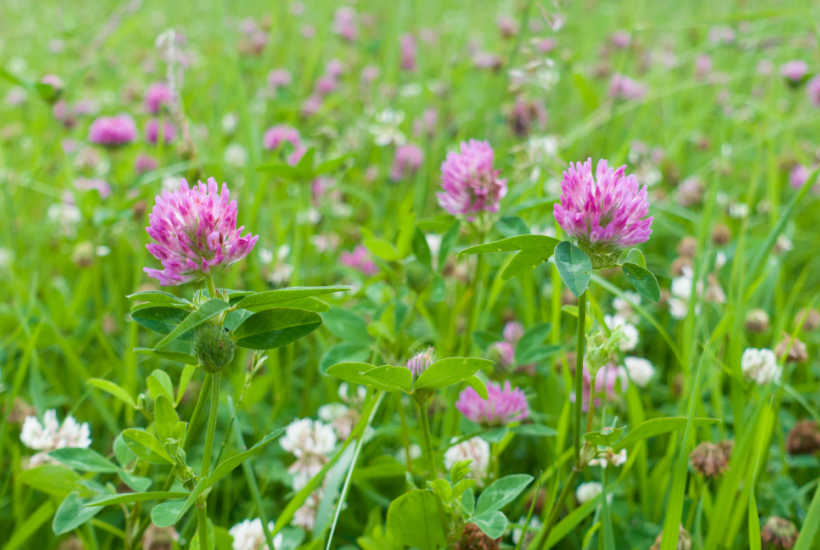
Where to find it: Red clover (Trifolium pratense) is native to Europe, Western Asia, and northwest Africa but is now widespread across North America. It commonly grows in meadows, fields, roadsides, and grassy areas. Red clover thrives in sunny locations with well-drained soil.
What to pick: The leaves and flowers of red clover are both edible. The young, tender leaves and the vibrant pink to purple flower heads are the most desirable parts for culinary use. Harvest the flowers when they are fully open and vibrant in color.
How to harvest: Use scissors or gently pluck the leaves and flower heads by hand. Be careful not to uproot the entire plant to allow it to continue growing. Regular harvesting of the flowers can encourage more blooms throughout the season.
How to use it: Red clover leaves can be eaten raw in salads or cooked similarly to spinach. The flowers can be used fresh to decorate salads, desserts, and beverages, adding a mild, sweet flavor. Both leaves and flowers can be dried and used to make herbal teas, which are often enjoyed for their potential health benefits.
Storage: Red clover leaves and flowers are best used fresh but can be stored in the refrigerator for a few days. For longer storage, the leaves and flowers can be dried and kept in an airtight container. Dried red clover is commonly used for making teas and infusions.
Identification: Look for trifoliate leaves with three oval leaflets, each marked with a characteristic pale crescent or “V” shape. The plant produces round, dense flower heads that are typically pink to purple in color. Red clover can grow up to 20 inches tall and has a slightly hairy stem.
Caution: Red clover is generally safe to eat, but it is important to ensure proper identification before consumption to avoid confusion with other similar-looking plants. Some people may experience allergic reactions, so it is best to consume in moderation, especially when first trying it.

Plantain Herb – Broadleaf Plantain
Where to find it: Plantain herb (Plantago major), also known as broadleaf plantain, is native to Europe and Asia but is now found worldwide. It grows in a variety of habitats including lawns, gardens, roadsides, and disturbed areas. Plantain thrives in compacted soils and can tolerate a range of conditions from full sun to partial shade.
What to pick: The young, tender leaves of plantain are best for culinary use. The leaves are edible and can be picked throughout the growing season. The seeds and flower spikes can also be harvested and used in various preparations.
How to harvest: Use scissors or gently pluck the leaves by hand, taking care not to uproot the entire plant. The leaves can be harvested continuously as the plant regrows quickly. The flower spikes and seeds can be collected when they mature .
How to use it: Plantain leaves can be eaten raw in salads, added to sandwiches, or cooked like spinach in soups, stews, and sautés. The leaves have a slightly bitter taste that mellows with cooking. The seeds can be ground into flour or used as a dietary supplement. The leaves and seeds can also be used to make herbal teas.
Storage: Plantain leaves are best used fresh but can be stored in the refrigerator for a few days. For longer storage, the leaves can be dried or frozen. The seeds can be dried and stored in an airtight container for later use.
Identification: Look for broad, oval-shaped leaves with prominent parallel veins and a smooth or slightly wavy edge. The leaves grow in a rosette pattern close to the ground. Plantain produces long, slender flower spikes with tiny, inconspicuous flowers. The plant can grow up to 12 inches tall.
Caution: Plantain is generally safe to eat and is widely used in herbal medicine. However, it is important to ensure proper identification before consumption to avoid confusion with other plants. As with any wild foraged food, consume in moderation, especially when first trying it.

Milk Thistle
Where to find it: Milk thistle (Silybum marianum) is native to the Mediterranean region but is now found worldwide, particularly in Europe, North America, and Australia. It typically grows in sunny, open areas such as fields, roadsides, and disturbed soils. Milk thistle thrives in well-drained soils and can often be seen in pastures and waste areas.
What to pick: The seeds, leaves, and roots of milk thistle are all edible. The seeds are the most commonly used part, known for their health benefits. Young leaves can be harvested before the plant flowers and used in salads or cooked dishes. The roots can also be dug up and used.
How to harvest: Use scissors or a knife to cut the leaves close to the base. Harvest the seeds by cutting the flower heads when they are mature and drying them before extracting the seeds. Dig up the roots carefully to avoid damaging the plant if you plan to use them.
How to use it: Milk thistle seeds can be ground into a powder and added to smoothies, teas, or baked goods. The young leaves can be eaten raw in salads or cooked like spinach. The roots can be roasted or boiled and eaten as a vegetable. Milk thistle is often used in herbal teas and supplements for its potential liver health benefits.
Storage: Milk thistle seeds should be dried and stored in an airtight container to maintain their potency. The leaves are best used fresh but can be stored in the refrigerator for a few days. The roots can be stored in a cool, dark place for a short period or dried for longer storage.
Identification: Look for large, spiny leaves with distinctive white veins that give the appearance of being splashed with milk. The plant produces large, purple, thistle-like flowers. Milk thistle can grow up to 6 feet tall and has a robust, upright stem.
Caution: Milk thistle is generally safe to eat, but it is important to ensure proper identification before consumption to avoid confusion with other thistle species. Some people may experience allergic reactions, particularly those allergic to plants in the Asteraceae family. Always consume in moderation and consult with a healthcare provider if you have any health concerns.
More wild plants you can find in April
Chives, Carragheen, Burdock Leaves, Fat Hen, Dandelion Flowers, Cow Parsley, Gorse Flowers, Morel, Magnolia Flowers, Nettle, Primroses, See Kale, Sea Beet, Wood Sorrel, Wild Fennel, Wild Garlic, Black Mustard, Wild Horseradish
This blog post was originally written on 29 December 2024 and last updated on 29 December 2024.