Elderflower Milk Pudding Recipe (Blancmange without gelatin)
My favourite creamy, no-gelatin milk pudding infused with fresh elderflowers. This easy cornstarch recipe is naturally vegetarian and can be made vegan with plant milk.
Milk pudding is something me and my brother always made together when we were kids. In those days, the pudding came in a sachet and all you had to do is to add some sugar and milk.
The original pudding had only few flavours – vanilla, chocolate, banana and raspberry and we often made several flavours together layering them in a large bowl.
The best thing was, that we knew that once it sets in the fridge, it was ours to devour!
PIN THIS FOR LATER

My practical tips on how to make my recipe successfully first time round
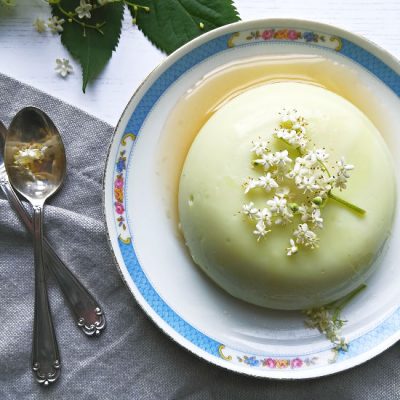
Today’s recipe is my grown up version of this milk pudding, infused with elderflowers which are now in season. You can serve the pudding with a dash of undiluted elderflower cordial or something like a lemon curd would go beautifully together too.
In case you’ve never made a milk pudding before, the consistency is like a blancmange. But my recipe, unlike a traditional blancmange recipe, doesn’t include gelatin. Instead of gelatin, I use cornstarch.
This makes this pudding not only suitable for vegetarians, but also much cheaper and quicker to make than the traditional blancmange.
MORE FORAGING RECIPES
If you use plant based milk, your vegan friends will be very happy too! In the last few years, I realised that my body is better off without milk, so I’ve used lactose-free milk.
You can use any kind of milk, but it will change slightly the flavour of the pudding. Elderflowers have quite a delicate flavour, so if you are using plant based milk, I would go for rice or almond milk.
Coconut and soya milk could overpower the flavour. And of course, any ‘normal’ milk is absolutely fine too!
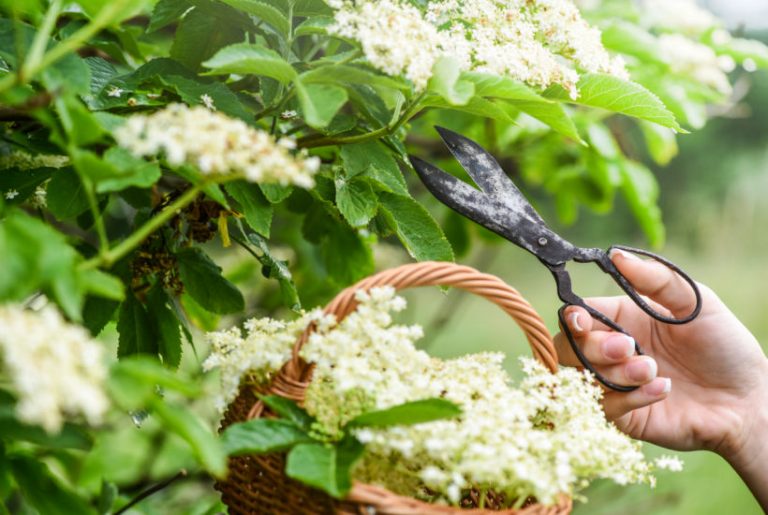
To flavour my milk pudding, I’ve used fresh elderflowers (about 5-6 small heads) but you can also use thick elderflower cordial or syrup (about 2-3 teaspoons depending on the strength.
You are also welcome to use elderflower essence (about 1/2-1 teaspon, depending on the strength), but the whole point of making this pudding is to use my foraged plants I bring home from my country walks.
One practical note about the cornstarch in the recipe. The cornstarch is best mixed in smaller amount of milk first and then added into the rest of the milk.
Because it can be quite difficult to make the whole thing nice and smooth I use a metal whisk for the whole process. It makes things much easier.
MORE FORAGING RECIPES
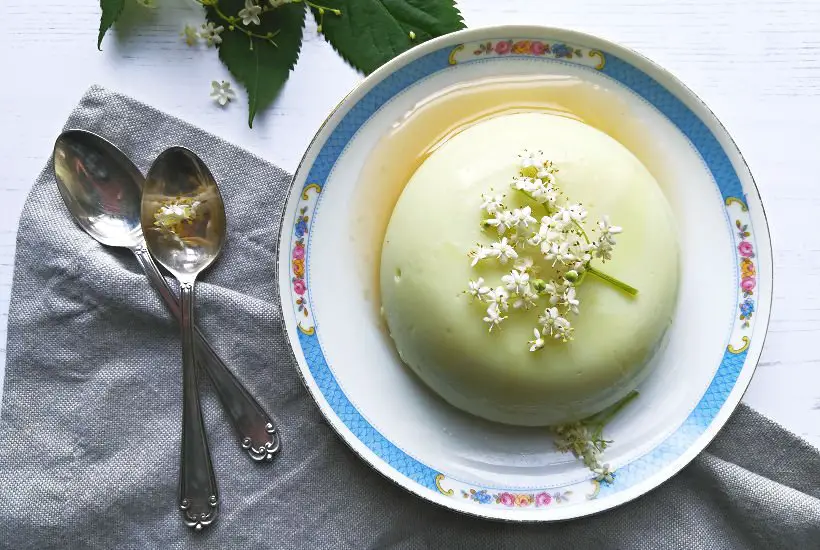
As you can see from the photos, I’ve used a tiny bit of green food colouring, but this is optional and you can definitely leave it out.
A Quick Note on Foraging
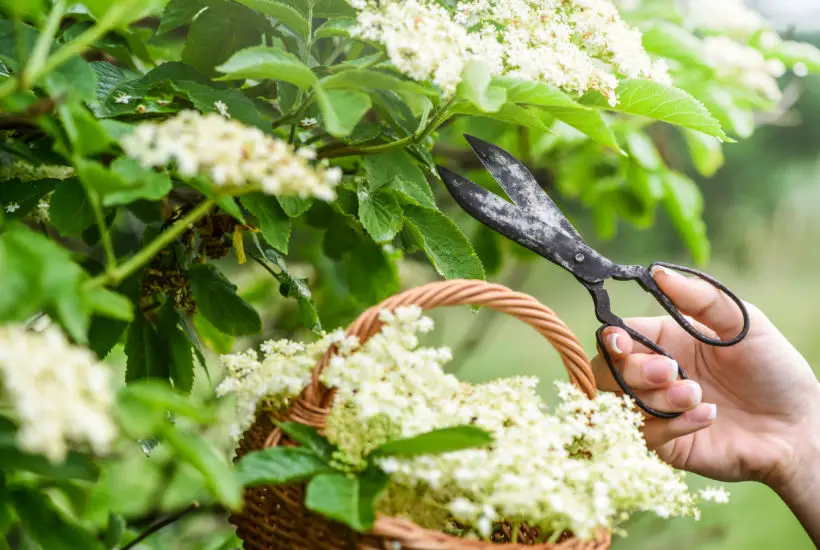
If you decide to go out and pick your own elderflowers, that’s awesome! Foraging is a lot of fun, but remember to be safe and responsible. Always pick your flowers from clean spots, far away from busy roads where there might be pollution.
Also, be 100% sure you have the right plant. The elderflower head is a creamy white, flat-topped cluster. Never eat anything you are unsure about! It’s also nice to leave plenty of flowers behind for nature.
MORE ELDERFLOWER RECIPES
Ingredients you will need
- 500 ml milk any type of milk
- 6 tbsp cornflower approx 45 g
- 3 tbsp sugar approx 45 g
- tiny pinch salt
- 5-6 elderflower heads smaller ones


How to make Elderflower Milk Pudding Recipe (Blancmange without gelatin)
Pour the milk in to a large saucepan and bring gently to a simmering point. Don’t boil!
Place the eldeflowers in the milk – flowers down and leave to infuse for about 20 minutes.
Pour the milk and elderflowers through a fine sieve and discard the elderflowers.
Pour about 1/3 of the milk into a large jug or a bowl.
Add the cornstarch to the milk in the bowl and mix with a whisk until it’s completely smooth.
Add the sugar and tiny pinch of salt to the saucepan with the majority of the milk.
Bring the milk slowly to the boil, stirring occasionally and making sure that the sugar has dissolved completely.
When the milk is nearly simmering, pour the remainder of the milk with the cornstarch in and continue to stir with a whisk. Work fast, as the mixture will thicken very quickly at this point. Carry on boiling until bubbles appear on the top and the whole mixture is nice and thick. This usually doesn’t take more than a minute.
Pour straightaway into pudding bowls or glasses and leave a little gap on the top for elderflower cordial, lemon curd or any other toppings.
Leave to cool down at room temperature and then place in the fridge for a further hour or so.
Best served on the same day or within 2-3 days (max). Keep in the fridge and serve straight from the bowl or gently turn out on the plate.
MORE FORAGING RECIPES


Why We Mix the Cornstarch First
This is the secret step that makes sure your pudding is perfectly smooth, without any lumps.
Think of it like making a paste before adding it to a big bowl of liquid. If you dump all the cornstarch straight into the hot milk, it will clump up right away, and you’ll end up with a very lumpy dessert. Cornstarch needs a little help to dissolve nicely.
By mixing it with a little bit of cold milk first, you give the cornstarch time to dissolve properly, creating a smooth liquid called a slurry. This slurry will then thicken the pudding beautifully and smoothly when you add it to the simmering milk later on! It’s an easy trick that guarantees a silky-smooth result every time.
MORE FORAGING RECIPES
Troubleshooting Your Pudding
What if you’ve done everything right, but your pudding still seems a bit too runny after it’s cooled down? Don’t panic! This usually means the mixture didn’t boil long enough after you added the cornstarch slurry.
Remember, cornstarch needs heat to activate and thicken the liquid. The good news is, you can fix it! Carefully pour the runny mixture back into your saucepan. Bring it slowly back to a boil, and whisk quickly for about one full minute. You should see it thicken up fast! Pour it back into your serving bowls and chill again.

Serving Suggestions and Fun Variations
Once your delicious elderflower pudding is set and wobbly, you can get creative with toppings! While undiluted cordial or lemon curd are fantastic, here are a few other ideas:
- Fresh Berries: Top it with a handful of fresh raspberries or blueberries. The tartness of the berries is perfect with the sweet, floral pudding.
- A Simple Sauce: Quickly warm up some strawberry or cherry jam with a tiny splash of water to make a quick sauce. Drizzle it over the top just before serving.
- Crunchy Bits: Add some texture by sprinkling on crushed shortbread cookies or a handful of toasted slivered almonds. A little crunch makes the creamy pudding even better!
Storing Your Elderflower Pudding
Once your delicious elderflower milk pudding is set, it’s very important to keep it cool! Since this dessert is made almost entirely with milk, it needs to be stored in the refrigerator at all times. It tastes best when eaten within 2-3 days of making it.
While it might still be safe to eat for a little longer, the texture will start to change, and it won’t be as fresh and wobbly. Make sure you cover the bowls tightly with plastic wrap or a lid before putting them in the fridge. This keeps the pudding from absorbing any funny smells and stops a dry skin from forming on top.
Stay in touch
Hope this blog post inspires you to make this recipe and if you do, I’d love to what you think! Let me know in the comments below or find me on Instagram, Facebook or Twitter and add the hashtag #practicalfrugality so that I can see your post.
Or why not subscribe to my weekly newsletter with frugal living tips and recipes straight to your mailbox.
Magdalena
Elderflower Milk Pudding (Blancmange without gelatin)
Ingredients
- 500 ml milk any type of milk
- 6 tbsp cornflower approx 45 g
- 3 tbsp sugar approx 45 g
- tiny pinch salt
- 5-6 elderflower heads smaller ones
Instructions
- Pour the milk in to a large saucepan and bring gently to a simmering point. Don't boil!
- Place the eldeflowers in the milk – flowers down and leave to infuse for about 20 minutes.
- Pour the milk and elderflowers through a fine sieve and discard the elderflowers.
- Pour about 1/3 of the milk into a large jug or a bowl.
- Add the cornstarch to the milk in the bowl and mix with a whisk until it's completely smooth.
- Add the sugar and tiny pinch of salt to the saucepan with the majority of the milk.
- Bring the milk slowly to the boil, stirring occasionally and making sure that the sugar has dissolved completely.
- When the milk is nearly simmering, pour the remainder of the milk with the cornstarch in and continue to stir with a whisk. Work fast, as the mixture will thicken very quickly at this point. Carry on boiling until bubbles appear on the top and the whole mixture is nice and thick. This usually doesn't take more than a minute.
- Pour straightaway into pudding bowls or glasses and leave a little gap on the top for elderflower cordial, lemon curd or any other toppings.
- Leave to cool down at room temperature and then place in the fridge for a further hour or so.
- Best served on the same day or within 2-3 days (max). Keep in the fridge and serve straight from the bowl or gently turn out on the plate.
This blog post was originally written on 14 June 2020 and last updated on 15 November 2025.