How to make roasted dandelion root coffee – A caffeine – free natural recipe
Are you looking to break up with caffeine without losing that cozy morning ritual? Enter: Dandelion Root Coffee. This earthy, roasted brew has been a total game-changer for me, because unlike your regular cup of joe, this “coffee” is naturally caffeine-free. I also like that it helps with digestion and I can also drink it later in the day without being awake at night!
The taste is much milder than real coffee, but the final flavour depends on how strongly you roast your dandelion roots. It can be served with or without milk or sugar, like a normal coffee.
The best part? You probably already have the ingredients growing in your backyard or garden. It’s surprisingly easy to forage and roast yourself, and today I’m going to show you exactly how to do it.

What does the dandelion coffee actually taste like?
If you’re expecting a 1:1 replica of a double espresso, you might be surprised! Dandelion coffee has a unique vibe. It’s definitely earthy and nutty, with a toasted quality that hits the same “comfort” spot as regular coffee.
Because it’s a root, it has a natural, subtle sweetness that balances out the bitter notes. If you roast it dark, you’ll get those cocoa-like, smoky undertones that feel really rich. It’s basically coffee’s chill, outdoorsy cousin.
MORE FORAGING RECIPES

When to pick dandelion roots
Ideally you want to collect your dandelion roots in the winter, when the roots are strong and all the important nutrients and vitamins are in the roots.
The next best time to forage for dandelion roots is in early spring before new leaves and flowers start to grow. At that point, the roots have all the nutrition stored for the new plant and by the time the new leaves and flowers grow the root becomes less nourishing.
You should choose older plants (just go for the large clusters), as they are about a year old and well matured. Younger dandelion plants are a little bit more bitter, but you can still use them if you can’t find anything else.
MORE FORAGING RECIPES

How to forage for dandelion roots
Like with the dandelion leaves and flowers, make sure that you dug up a plants that are healthy, away from main traffic and not sprayed with any chemicals. Although we will be using the roots and there is a less chance of contamination, you never know! So don’t take the chances.
If you can’t find any dandelions in the wild, you can always have a look in your own garden or as a neighborough, who will be only too happy you want to dig up his weeds!
It’s best to pick the roots in the morning after a good night of rain. The soil will be much easier to dig than if it was dry.
To make sure you get the root of the plant, use something long, like a knife, weeding garden tool or small trowel to slide next to the plant and then take out as long piece as you can. It’s practically impossible to just pull the dandelion roots by it’s leaves, unlike other plants, these roots are very strong!
MORE FORAGING RECIPES
How to prepare your dandelion roots
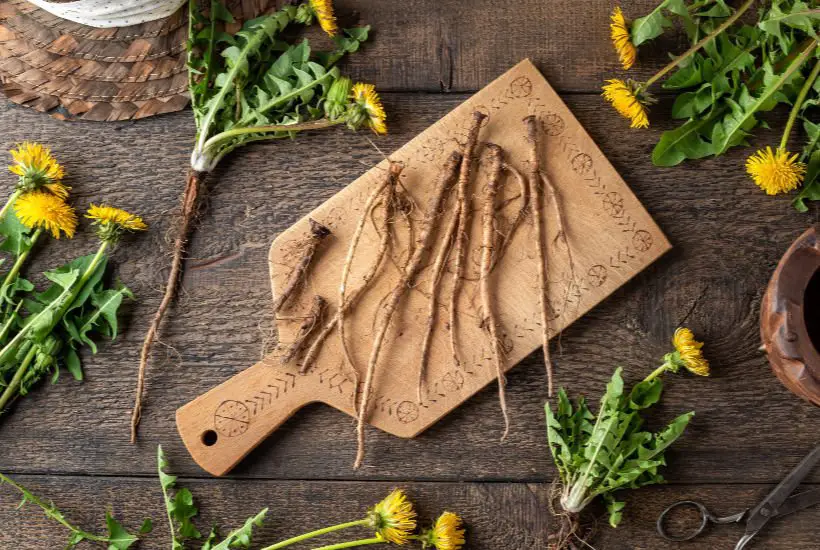
Once you have collected enough roots, cut the leaves and flowers (if any) off (use them for a quick salad, make a dandelion flowers honey, delicate dandelion vinegar or even compost them), scrub them and wash them and then leave them to dry somewhere warm, but not on direct heat. Something like a radiator or an airing cupboard is perfect.
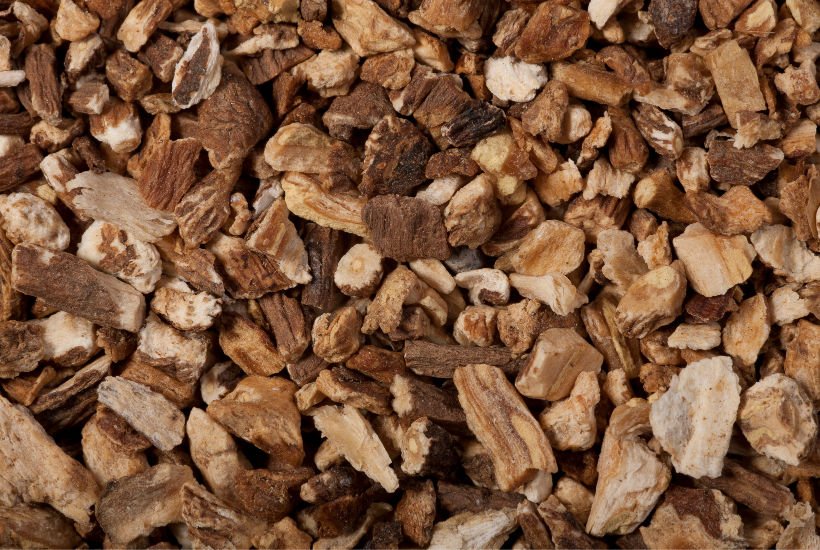
After a few days, when the roots are completely dry, cut the dried roots into about 1 cm pieces. If you have very chunky roots, cut them up into even smaller pieces.
The smaller pieces you have the quicker the drying will be and the easier it will be to roast your roots in the next step. If you prefer to speed things up a bit you can always use a food dehydrator or oven on a very low setting (50 – 100C or 150-200F).
The dandelion roots are dry, when they are completely hard and pretty much look like small twigs.
The next job is to roast them, by placing them on a clean baking tray and putting them in a medium heat oven (about 100- 120C). Keep an eye on them and make sure to turn them once in a while to get an even roast. Depending on how brown you want your roots to be, this can take up to 15-20 minutes.
If you prefer your coffee with deeper flavour, keep going until the colour is dark brown. Don’t burn them, though, because your coffee wouldn’t taste very nice.
Once your dandelion roots are the right colour, leave them to cool down.
Keep in a sealed jam jar and only grind what you are going to use to prevent the roots being spoiled.
FORAGING GUIDES
- Monthly Foraging Guide – What’s in season now >>
- Foraging Guide – Getting started with foraging in the UK >>
- Best foraging books to get you started with wild food >>
How to make your dandelion coffee at home
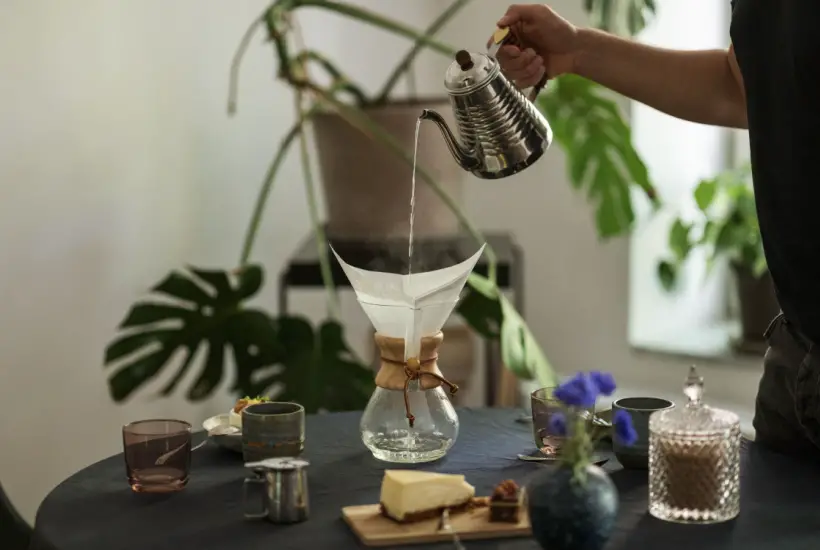
To make your coffee, grind the roasted dandelion roots are you would normal coffee and use the same quantity as you would normally use to make your coffee.
You can always adjust the strength by grinding more coffee or leaving it to infuse for longer using hotter water.
I like my coffee very week, so I usually put one tablespoon of my dandelion coffee to tea strainer (which I only use for a coffee) and place it a large mug and then pour hot water over it. Leave it for about 10 minutes and then add a little bit of dairy-free milk.
I also like to drink this coffee without any milk and I don’t use sugar, but I’ve been told it tastes good with a little sugar or honey too.
MORE FORAGING RECIPES
My top tip for prepping the “perfect” grind
When you’re ready to brew, don’t feel like you have to turn the roots into a fine powder. A coarse grind (like sea salt) usually works best, especially if you’re using a French press or a tea infuser. This prevents the “coffee” from getting too muddy or sediment-heavy.
If you don’t have a coffee grinder, a mortar and pestle works, or you can even put them in a bag and give them a good whack with a rolling pin!
Storing dandelion coffee at home
To keep that freshly-roasted aroma alive, treat your roasted roots like high-end coffee beans. Keep them in an airtight jar in a cool, dark cupboard.
They’ll stay fresh for about several months, but for the best flavor, try to use them within 4-6 weeks.
If you’ve harvested a massive batch of roots but haven’t roasted them yet, you can actually keep the dried (but unroasted) roots in a jar for up to a year!
MORE FORAGING INSPIRATION
- Rosebay Willowherb: Identification, Uses & Recipes >>
- Foraging for Acorns: Preparing Acorns & Recipes >>

A little heads-up
While dandelions are generally super friendly, there are a couple of things to keep in mind. Since dandelion is a natural diuretic (meaning it helps you pee!), it might interact with certain medications like blood thinners or lithium.
Also, if you’re allergic to ragweed, daisies, or marigolds, you might want to start with a very small sip to make sure your body is cool with it. As always, if you’re pregnant or nursing, a quick chat with your doctor is a good idea before making it a daily habit!
This blog post was originally written on 13 May 2020 and last updated on 24 December 2025