How to Make Dandelion Vinegar: A Simple Foraged Recipe for Better Digestion
If you’re looking for a simple way to bottle up a bit of spring, this dandelion vinegar is the perfect project.
It’s incredibly easy to put together, though you do need to be patient—it takes about a month for the flavor to really mature.
I usually make a few jars at once because it’s become such a staple in my kitchen. I reach for it all the time, whether I’m whisking up a quick salad dressing or just want to add a healthy, zesty kick to my cooking. Trust me, once you try it, you’ll never look at those “weeds” in your garden the same way again!
Why make dandelion vinegar
If you’ve ever found vinegar a bit too “sharp” on its own, you’re going to love this. Dandelions have a natural, pleasant bitterness that acts like a secret ingredient—it actually tames the acidity of the vinegar. The result? A mellow, floral, and slightly nutty infusion that makes your home-cooked meals taste like they came from a fancy bistro.
Beyond the taste, it’s a total powerhouse for your gut. Dandelions are famous for helping with digestion and are packed with antioxidants. By infusing them into vinegar, you’re essentially creating a “wellness tonic” that you can drizzle right over your dinner. It’s the easiest way to add a boost of nutrition to your daily routine without even trying!
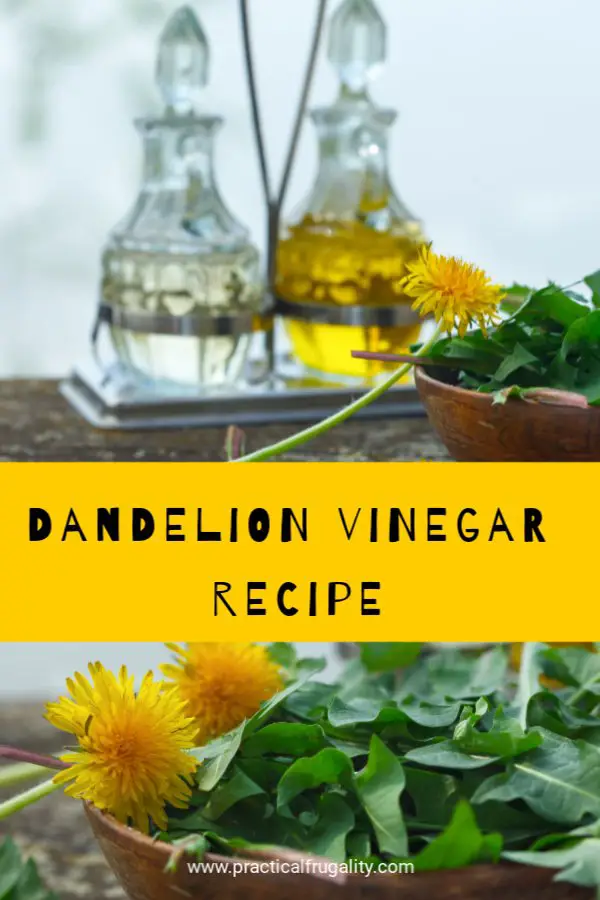
PIN TO KEEP FOR LATER
When to pick the best dandelions
If you can remember, it’s best to forage for dandelions in the spring, when they are young and full of nutrition from their roots, although it’s possible to make dandelion vinegar any time you see suitable dandelions to pick.
FORAGING GUIDES
- Monthly Foraging Guide – What’s in season now >>
- Foraging Guide – Getting started with foraging in the UK >>
My top tips for making your own dandelion vinegar
Make sure your dandelions they are clean and pest free as this would affect the flavour of your vinegar.
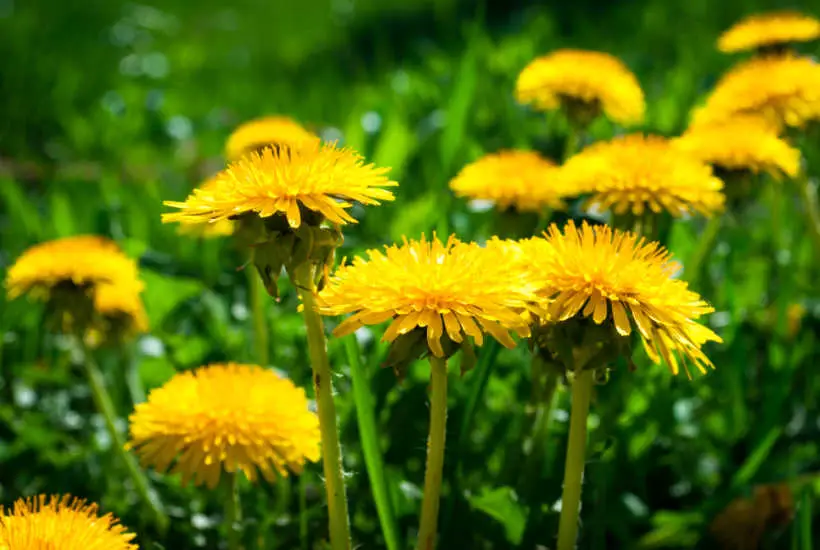
Which part of dandelion should I use?
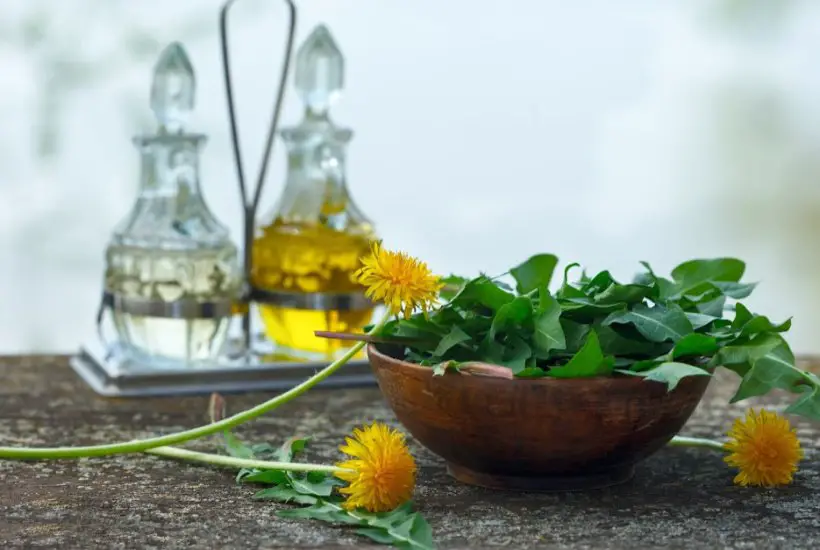
You can use flowers, green leaves or even the roots
You can mix them together or separate them to get distinctly different types of infusion
Yellow Dandelion Flowers – light infusion with delicate, honey-like scent
Green Leaves – rich infusion
Roots – earthy, dark infusion (this is the most medicinal and has a deep, savory “umami” flavor that’s incredible in gravies)
MORE FORAGING RECIPES

What kind of vinegar is best to use?
There is no right or wrong, you can use whatever vinegar you have at hand. The final flavour will depend on the type you use, so you want to choose something that will compliment the bitterness of dandelions
White wine vinegar – for delicate, yet sharp infusion
Apple cider vinegar – for a floral/fruity infusion
White vinegar – for a light infusion
Malted Vinegar – to achieve a deeper/darker flavour
How long should I infuse my dandelion vinegar?
Ideal time is around 4 weeks, but different time will give you the different intensity of flavouring. It also depends on what part of the dandelion you are using.
Flowers can be infused for about one week and you get nice enough flavour, whereas dandelion roots need a lot longer (full 4 weeks as minimum).
MORE FORAGING RECIPES

What is the best use for the dandelion vinegar?
Just think about it like a normal dressing vinegar, which is the best use for salad dressings or to add to your cooking for flavour.
My Favourite Way to Use It: “The Sunshine Vinaigrette”
If you’re wondering what to do with your first batch, this is my go-to recipe. It’s bright, zesty, and makes even a simple bowl of greens feel special.
What you’ll need:
- 3 tbsp Dandelion Vinegar
- 6 tbsp Extra virgin olive oil (or cold-pressed rapeseed oil)
- 1 tsp Dandelion honey (or maple syrup)
- 1 tsp Dijon mustard
- A pinch of salt and black pepper
How to make it: Just pop everything into a small jam jar, screw the lid on tight, and give it a really good shake until it looks creamy.
Best served with: This dressing is incredible over a salad of baby spinach, walnuts, and some goat cheese. If you have some fresh dandelion leaves (the young, tender ones!), toss those in too for a complete garden-to-table experience!
Other Quick Serving Ideas:
- The “Bright” Soup Hack: Stir a tablespoon into a heavy lentil or vegetable soup just before serving. The acid cuts through the salt and makes the flavors pop.
- Deglazing the Pan: After cooking some mushrooms or greens, pour a splash of your dandelion vinegar into the hot pan to scrape up all those tasty browned bits. It makes a “flash sauce” that is out of this world.
- A Morning Tonic: If you’re into wellness shots, mix 1 teaspoon of the vinegar into a glass of warm water with a squeeze of lemon. It’s a great way to wake up your digestion!
MORE DANDELION RECIPES
Keep it “submerged” (The Golden Rule)
One little tip to ensure your vinegar stays perfect is to make sure all the dandelion parts are completely covered by the liquid.
If a leaf or flower pokes out above the vinegar line, it can catch a bit of mold. If you’re using flowers, they tend to float, so just give the jar a gentle shake every few days to keep them coated, or use a clean stone or glass weight to keep everything tucked under the surface.
A note on your jar lids
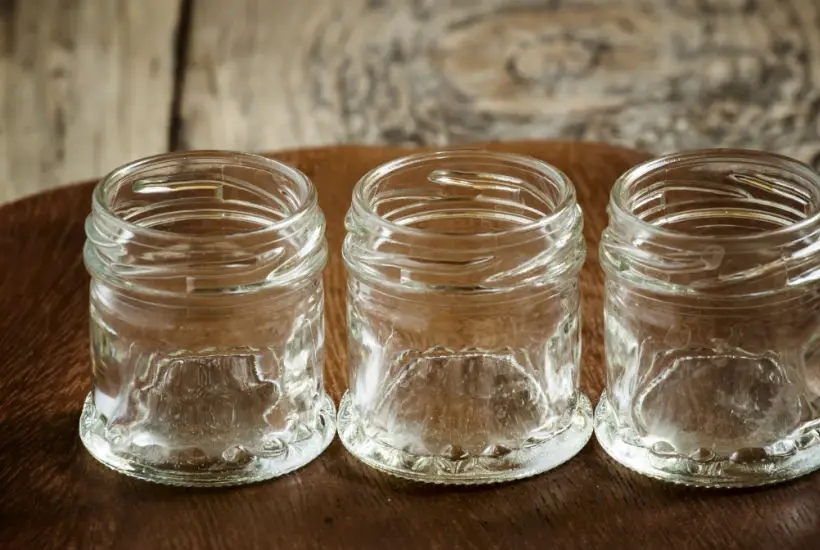
Vinegar is amazing, but it’s also pretty “reactive.” If you use a jar with a metal lid, the vinegar can actually corrode the metal over time, leaving you with a rusty lid and a ruined batch!
To avoid this, try to use a jar with a plastic lid, or simply place a piece of parchment paper or wax paper over the top of the jar before screwing the metal lid on. It’s a simple trick that keeps your vinegar tasting fresh and rust-free.
Creative ways to use your dandelion vinegar
While this is a rockstar in a salad dressing, there are so many other ways to use your dandelion vinegar! Try adding a splash to a pot of soup or a stew right at the end of cooking—it adds a “brightness” that really wakes up the flavors.
It’s also a fantastic marinade for chicken or tofu. If you’re feeling adventurous, you can even dilute a tablespoon of the flower version in a glass of fizzy water for a refreshing, gut-healthy tonic!
MORE FORAGING RECIPES
Storing and Shelf Life
Once you’ve strained out the dandelion bits after that month of waiting, pour your finished vinegar into a clean glass bottle. You don’t need to keep it in the fridge; a cool, dark cupboard is perfect. It’ll stay good for at least 6 months to a year, but the flavor is usually best in the first few months. If you used the flower method, you’ll notice the beautiful golden color might fade slightly over time, but it’ll still taste delicious!
Dandelion Vinegar: Your Questions Answered
Does it need to be kept in the fridge? Nope! Because vinegar is high in acid, it’s a natural preservative. Once you’ve strained out the plant parts, you can keep your dandelion vinegar in a cool, dark cupboard. It’ll stay perfectly fine for about 6 months to a year, though the flavor is always punchiest in the first few months.
Can I use dried dandelions instead of fresh ones? You definitely can! If you have dried roots or leaves from your coffee-making stash, feel free to use them. The flavor might be a bit more concentrated and “earthy” rather than “floral,” but it works just as well. Just remember that dried herbs soak up more liquid, so you might need to top up the vinegar after a day or two.
Help! My vinegar has gone cloudy. Is it still safe? Don’t panic! If you used raw Apple Cider Vinegar (the kind “with the mother”), it’s totally normal for it to look a bit cloudy or develop a sediment at the bottom. However, if you see actual fuzzy mold growing on the surface or if it smells “off” (like rotten fruit rather than sharp vinegar), it’s best to play it safe and compost that batch.
What if I don’t have a full month to wait? We’ve all been there—patience is hard! If you’re using just the yellow flower petals, you can actually get a decent infusion in as little as 10 days. The roots really do need that full month to give up their goodness, though. If you’re in a rush, keep the jar in a slightly warmer (but not hot) spot to speed up the process a tiny bit.
Can I use the stems too? It’s better to stick to the flowers, leaves, and roots. The stems contain a milky sap (latex) which can be quite bitter and might make your vinegar taste a bit “funky” rather than fresh. It’s not harmful, but your tastebuds will thank you for skipping them!

Dandelion Vinegar
Ingredients
- 1 cup vinegar
- 1/2 cup dandelion flowers & leaves
Instructions
- Fill up a large glass jam jar with 1/2 cup of freshly picked dandelion flowers and leaves
- Add about 1 cup of vinegar of your choice
- Close the jam jar, shake thoroughly and store in a cool place (out of a direct light or a sunlight) for about a month.
- Shake the jam jar every day to move the dandelions around to help the infusion.
- After about a month, pour the mixture over a fine sieve and store the infused vinegar in a newly sterilised glass bottle, suitable for vinegar (should have ceramic or plastic lid)
- Store away from direct sunlight in a cubboard
This blog post was originally written on 14 May 2020 and last updated on 24 December 2025