Foraging for Elderflowers: The complete guide & recipes
Every year in late May, I head to the nearby hedgerows to find the first white elderflowers. For me, summer hasn’t truly started until I’ve picked my first basket of these “lacy umbrellas.”
I love foraging for elderflowers because you can do so much with them. I use them to make sweet cordials, healing tinctures for winter, and even crispy elderflower fritters for a snack.
FORAGING RESOURCES
- Foraging Guide – Getting started with foraging in the UK >>
- Best foraging books to get you started with wild food >>
Botanical & Historical Basics
- Common Name: Elder or Elderberry
- Latin Name: Sambucus nigra
The name “Elder” comes from the Anglo-Saxon word aeld, which means “fire.” This is because the hollow stems were once used as tubes to blow air into the center of a fire to get it started.
The main types of Elder:
While there are several types of Sambucus around the world, the two most common are:
- European Elder (Sambucus nigra): The most common variety found in the UK and Europe, known for its flat-topped flower clusters and dark berries.
- American Elder (Sambucus canadensis): Very similar to the European version, common across North America.
- Red Elderberry (Sambucus racemosa): Found in cooler climates; it has cone-shaped flower clusters and red berries (which are generally not eaten raw).
Where and When to Find Elderflowers
Native Habitats: Elder grows naturally across Europe, North Africa, and parts of Asia. It loves “nitrogen-rich” soil, which is why you often find it near old rabbit warrens or places where livestock have been.
Where to find Elder in the UK: You don’t have to go far! It is everywhere in the UK. Look in:
- Hedgerows and country lanes.
- The edges of woodlands.
- Local parks and overgrown gardens.
- Warning: Avoid plants growing right next to busy roads, as they soak up car exhaust fumes.
Growing season for Elderflowers: The flowers usually appear from late May to July. They bloom best after a few days of warm, sunny weather. Once the flowers fade, they turn into dark purple berries in late August.

How to identify Elder tree & Elderflowers
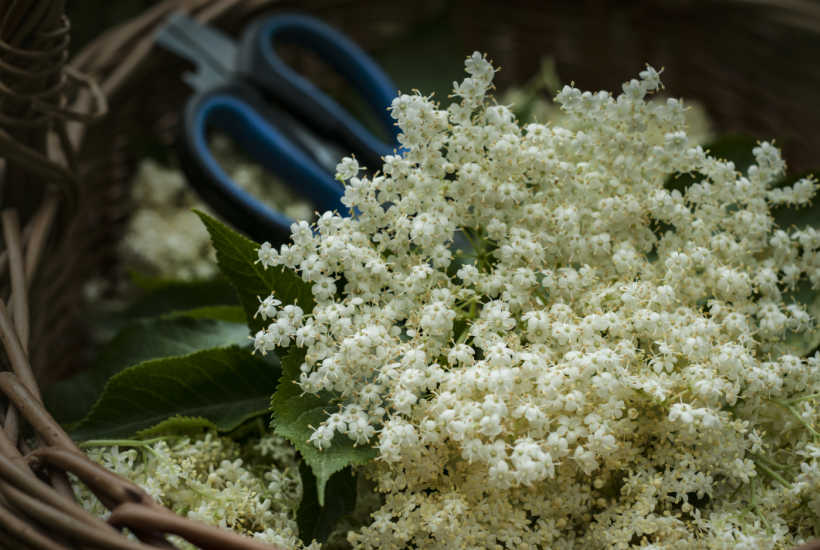
- The Flowers: Tiny, creamy-white flowers with five petals, grouped in large, flat-topped clusters (called “umbels”).
- The Leaves: Feather-like (pinnate) with 5 to 7 leaflets. The edges are “serrated” (toothed like a saw).
- The Bark: Grey-brown and corky. On older trees, the bark looks deeply furrowed and feels spongy.
- The Smell: A very distinct, sweet, floral scent.
Are there any plants that look like Elder?
Yes, and this is very important! You must avoid Hemlock and Water Dropwort. These are highly poisonous.
- The Difference: Hemlock grows from the ground on purple-spotted stalks. Elder grows on a woody shrub or tree.
- Red Elderberry: Avoid the flowers of the Red Elderberry, as they can cause stomach upsets.

The “Smell and Stem” Identification Test
Before picking, check two things:
- The Stem: Is it woody? Elder is a shrub, so the flowers grow from woody branches, not soft green stems coming straight out of the ground.
- The Scent: Does it smell like honey and lemon? If it has no smell or smells “rank” (like wet dog), don’t pick it.
Ethical Foraging and the “One-Third Method”
When you’re collecting flowers from nature, it’s important to be respectful and thoughtful so you don’t harm the environment. Here’s a simple rule to follow: only take about one-third of the flowers you find on any single tree. This means you should leave one-third of the flowers alone so they can grow into berries, which birds and other animals need for food. You should also leave another one-third for other people who might want to collect flowers and for insects that depend on them.
The Secret to Perfect Texture: The “Shake & Snip”
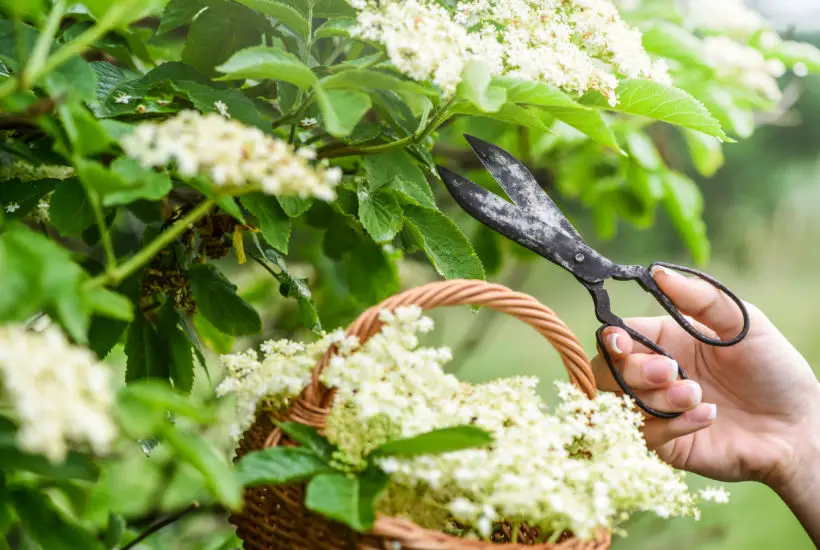
When preparing elderflowers, never wash them under a tap! Water washes away the flavorful pollen and makes the flowers soggy. Instead, give them a gentle shake to remove any tiny bugs, then use scissors to snip the flowers away from the thick green stalks.
How to store and keep Elderflowers
- Fresh: Use them immediately for the best flavor.
- Drying: Hang them upside down in a warm, dry place. Once dry, strip the flowers and keep them in a jar for tea.
- Freezing: You can freeze elderflower heads in a bag, but they will turn brown. They are best used straight away in cordials.
Medicinal Properties & Home Remedies
Medicinal properties: Elderflowers are famous for being anti-inflammatory and antiviral. They have been used for generations to help fight off the common cold.
Natural remedies at home:
- Cold & Flu Relief: Elderflower tea is often used to help break a fever by encouraging sweating.
- Skin Care: “Elderflower water” was used in Victorian times to lighten freckles and soothe sunburn.
How to prepare home remedies:
- Elderflower Tea: Place 2-3 fresh flower heads in a mug and cover with boiling water. Let it steep for 10 minutes. Add honey and lemon for a soothing winter drink.
- Skin Wash: Simmer flowers in water for 15 minutes, strain, and let it cool. Use a soft cloth to dab the liquid onto irritated skin.
How to Use Elderflowers in the Kitchen
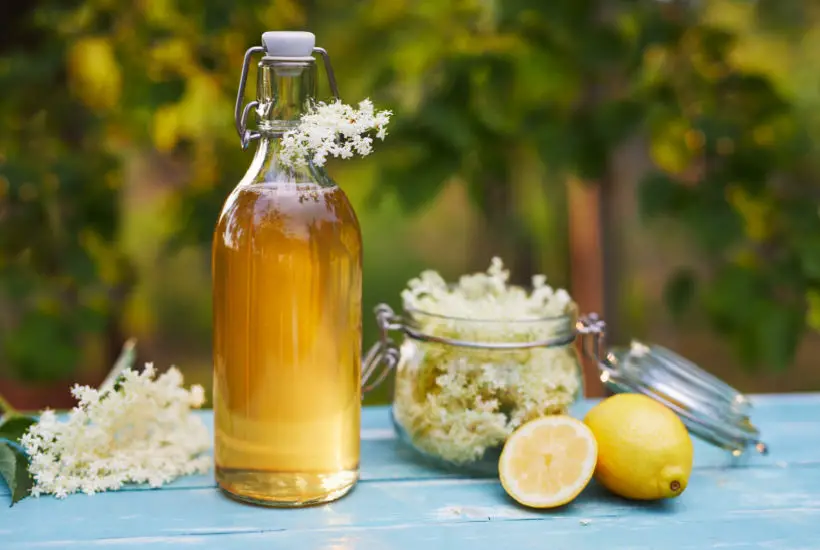
- Elderflower Cordial: The classic! Boil sugar, water, and lemons, then soak the flowers in the syrup for 24 hours.
- Elderflower Fritters: Dip the whole flower head into a light pancake batter and fry until crispy. Dust with sugar.
- Summer Salads: Sprinkle the tiny individual flowers over a green salad for a sweet, floral surprise.
- Flavored Sorbet: Add a splash of cordial or fresh flowers to a lemon sorbet mix.
- Baking: Fold the tiny flowers into lemon cake batter or shortbread dough.
MY FAVOURITE ELDERFLOWER RECIPES
- Elderflower Tincture – Easy Recipe & Usage >>
- Elderflower Gin >>
- Elderflower Cordial – without citric acid >>
- Elderflower Champagne >>
- Elderflower Milk Pudding >>
Safety Precautions
- Raw Parts: Never eat the green stems, leaves, or bark. They contain a chemical that can turn into cyanide in your body and make you very sick.
- Allergies: Some people with hay fever may react to the heavy pollen in elderflowers.
- Pregnancy: As with most wild herbs, consult a doctor before using elderflower medicinally if you are pregnant or breastfeeding.
Symbolism & Folklore: The Magic of the Elder Tree
The elder tree has a longer history of superstitions than almost any other plant in Europe. For centuries, it was treated with a mix of deep respect and a little bit of fear.
The “Elder Mother”
In many cultures, especially in Scandinavia and England, it was believed that a spirit called the Elder Mother (Hyldemoer) lived inside the tree. She was the protector of the wood.
- The Permission Rule: Legend says you should never cut down an elder tree or prune its branches without asking the Elder Mother for permission first. If you didn’t, it was said you would have bad luck or that the spirit would follow you home!
A Tree of Protection
Despite the fear of the Elder Mother, the tree was often planted near houses for protection.
- Warding off Evil: People planted elder trees by their front doors or garden gates to keep out witches and evil spirits.
- Barn Protection: Farmers would hang elder branches in barns to protect their cows and prevent the milk from turning sour.
- The “Witch’s Tree”: Ironically, while it was used for protection, some stories claimed that witches could turn themselves into elder trees to hide.
Life, Death, and Magic
The elder tree is unique because it carries the “circle of life.” It has beautiful white flowers in the spring (representing life and birth) and dark, blood-red juice in its berries in the autumn (often associated with death or the afterlife).
- The Harry Potter Connection: In modern fiction, the most powerful wand in the world—the Elder Wand—is made from an elder tree. This fits perfectly with ancient folklore, which often described the wood as having powerful, “dark” magical properties.
- The Summer Solstice: It was said that if you stood under an elder tree on Midsummer’s Eve (the Summer Solstice), you might see the King of the Fairies and his court riding by. Just be careful not to fall asleep, or you might be carried away to the fairy realm!
This blog post was originally written on 25 December 2025 and last updated on 25 December 2025