Foraging for Douglas Fir Needles: A Complete Guide + Tea Recipe
Douglas Fir needle tea tastes like fresh grapefruit and lime, and you can make it from needles you pick yourself. This evergreen tree now grows across Britain, and harvesting the soft needles is easy and gentle. The tea is packed with vitamin C, especially useful during winter months.
Whether you are new to foraging or already experienced, this guide will show you where to find Douglas Firs, how to harvest them safely, and how to make delicious tea at home. We’ll also help you identify the tree correctly and explain storage tips.
Where to find Douglas Fir
Despite its name, the Douglas Fir (Pseudotsuga menziesii) is not a true fir, nor a pine or spruce. It was introduced to the UK in the 19th century and is now a common sight in forestry plantations, large estates, and mixed woodlands across Britain. It thrives in the wetter climates of the north and west but is widely distributed throughout the country. It is often recognizable by its immense height, as it is one of the tallest tree species in the UK.
Best Harvesting Times and Seasons
Whilst December offers peak vitamin C levels, spring (March to May) is an excellent time to harvest young, tender needles that have just emerged. Autumn months (September to November) are also ideal, as the needles develop their strongest citrus flavour. Early morning harvests, after the dew has dried, yield the most aromatic needles.
Identification
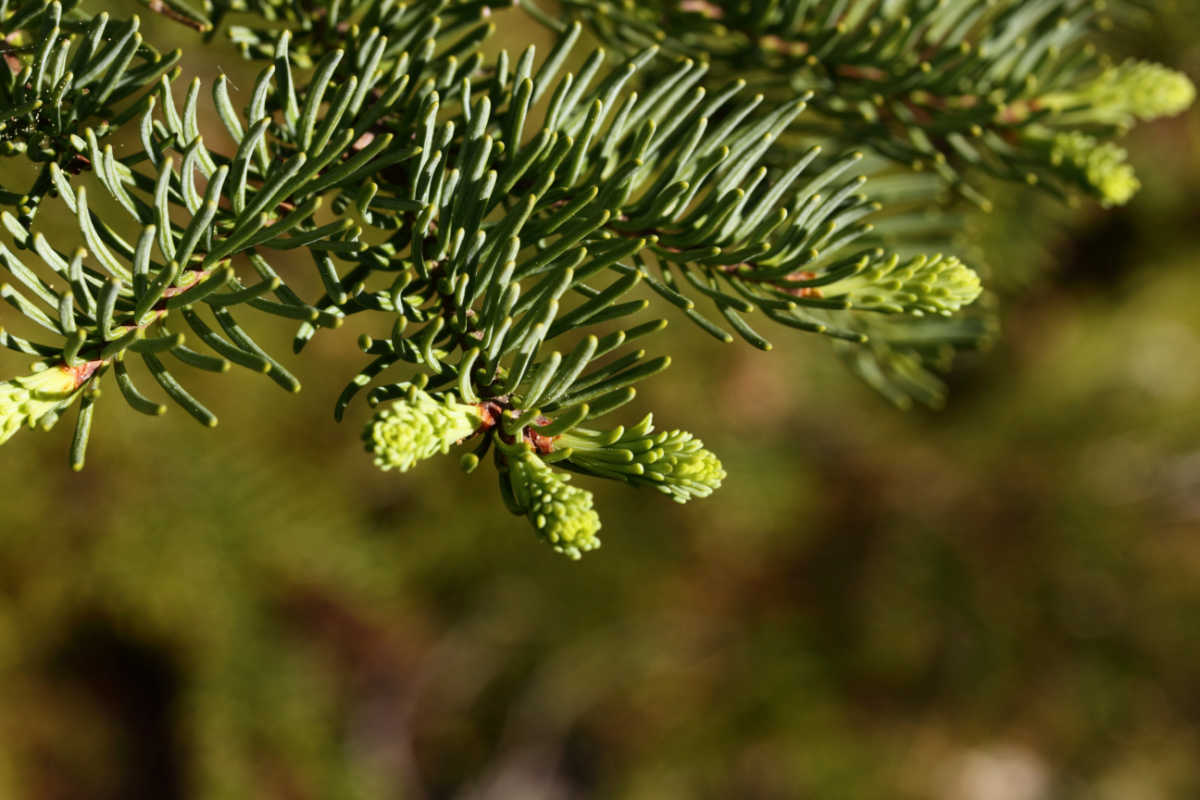
The needles are flat, soft, and grow individually from the twig (unlike pine needles which grow in bundles). They have a blunt tip and two pale white stripes on the underside. The most foolproof way to identify Douglas Fir is by its scent: crush a needle between your fingers, and it should smell strongly of citrus or orange peel. Additionally, their cones are unique, featuring three-pointed bracts that look like the back half of a mouse (two legs and a tail) sticking out from between the scales.
Spruce and pine needles are bunched together, whilst Douglas Fir needles grow individually. Fir trees (true firs) have needles that sit flat on the twig like a comb, similar to Douglas Fir, but true firs lack the distinctive citrus scent.
What to pick
The soft, flexible needles are the part used for making tea. While they can be harvested year-round, the needles are particularly pleasant in December when their high Vitamin C content provides a seasonal health boost. Look for needles that are vibrant green and firmly attached to the branch.
Flavour Variations
Younger needles tend to have a brighter, more lemony taste, whilst older needles develop deeper, more complex citrus notes. Trees growing in sunnier locations often produce needles with stronger flavours than those in shaded areas.
How to harvest
Harvesting Douglas Fir is much gentler than harvesting pine or juniper, as the needles are soft and do not prick the skin. Simply snip a small twig or pull a handful of needles from the branch. Because these trees can grow very tall, you may need to look for lower-hanging “skirt” branches or search for branches that have recently fallen during winter storms. Ensure you are foraging away from busy roads to avoid picking up exhaust pollutants.
How to use Douglas fir
Douglas Fir is prized by foragers for its incredible flavor profile, which is much more “citrusy” and “zesty” than other conifers, often reminding people of grapefruit or lime. To make tea, finely chop a tablespoon of fresh needles to expose the interior. Place them in a cup and pour over hot (but not boiling) water—approximately 80°C is ideal to preserve the delicate aromatic oils and Vitamin C. Steep for 5–8 minutes until the water takes on a pale yellow hue and a bright, resinous scent.
Storage
Douglas Fir needles are best used fresh to enjoy the bright citrus notes. If necessary, you can store a small branch or a bag of needles in the refrigerator for up to two weeks. They can also be dried for later use, though they will lose some of their zingy citrus flavor and become more “woody” and “pine-like” over time.
Sustainable Foraging Practices
Only harvest from trees with plenty of foliage—never strip a branch bare. Take no more than a small handful from any single tree, and avoid harvesting from the same tree more than once per month. This ensures the tree remains healthy and can continue to grow.
Safety first
As with all conifer foraging, you must be 100% certain of your identification to avoid the deadly toxic Yew tree. While Douglas Fir smells like citrus and has blunt needles, the Yew tree has no such scent and its needles are typically darker green and more pointed. Additionally, as a general rule, conifer teas should be avoided during pregnancy. Always start with a small amount to ensure you do not have an individual sensitivity to the tree’s resins.
Historical Introduction of Douglas Fir to England
The Douglas Fir was named after David Douglas, a Scottish botanist and plant hunter who collected seeds from western North America in the 1820s. The tree is actually native to the Pacific Northwest of America, making it a relatively recent arrival to Britain—only about 200 years old in our landscape.
The tree became fashionable during the Victorian period when wealthy landowners and estates competed to grow exotic trees from around the world. Many grand estates planted Douglas Firs as part of their ornamental collections, which is why they are still commonly found on large country properties today.
In the 20th century, the Douglas Fir became hugely important to Britain’s timber industry. It was planted extensively in forestry plantations because it grows tall and straight very quickly, making it ideal for producing building materials and paper. Many of Britain’s commercial forests contain large numbers of Douglas Firs today.
This blog post was originally written on 25 December 2025 and last updated on 25 December 2025