
October Foraging Guide: Guide to wild food & Recipes
October is the month of the “second spring” in the UK. While the bright flowers of summer have faded, the cooling temperatures and autumn rains bring a fresh flush of salad greens, a bounty of hardy nuts, and the peak of the mushroom season.
Foraging in October is all about the forest floor and the heavy hedgerows. It’s the best time to gather ingredients for hearty winter stews, infused spirits, and roasted snacks. As the days shorten, the rewards of the harvest become even more satisfying.
October foraging overlaps significantly with September and November, so keep an eye on the changing weather—a late frost can change the flavor of berries overnight.
FORAGING RESOURCES

Winter Chanterelle (Yellowthistle)
Where to find it: Found in mossy beech or pine woodlands. They often hide under fallen leaves, so look closely!
What to pick: Foraging for chanterelle mushrooms is very easy, you just pick the entire mushroom. They often grow in large groups, so where you find one, there are usually dozens more.
How to use it: They have a lovely, peppery, and slightly fruity flavor. Excellent in risottos, omelets, or simply sautéed in butter. They are thinner and more delicate than the summer Golden Chanterelle.
How to harvest: Pinch at the base or cut with a knife to keep the forest floor intact.
Storage: These mushrooms dry exceptionally well. You can also keep them in the fridge for up to 5 days.
Identification: A funnel-shaped cap that is brownish-grey on top with a hollow, bright yellow stem. Instead of true gills, they have shallow, vein-like ridges on the underside that run down the stem.
Caution: Ensure you don’t confuse them with the Jelly Baby fungus, which is more rubbery and lacks the “veins.”
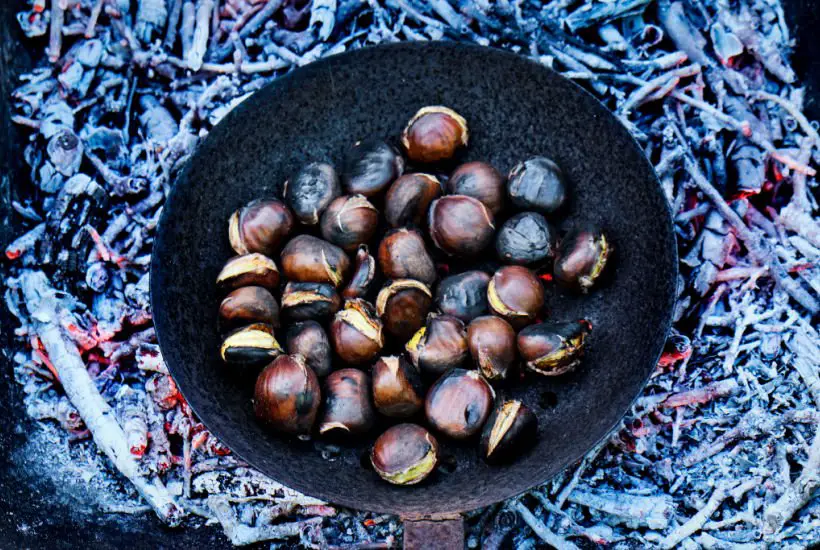
Sweet Chestnuts
Where to find it: Sweet Chestnuts (Castanea sativa) are found in broadleaf woodlands, parks, and large estates across the UK, particularly in southern England. They prefer well-drained, slightly acidic soil. Do not confuse them with Horse Chestnuts (Conkers), which are toxic and have a much spikier, blunt-thorned husk.
What to pick: The nuts are the edible part. In October, the husks turn yellow-brown and split open, dropping the nuts to the ground. Look for nuts that are firm, shiny, and heavy for their size.
How to harvest: Use your boots to gently squeeze the spiny green “urchin” husks to reveal the nuts inside—this protects your fingers from the incredibly sharp needles. Collect nuts that are plump; flat ones usually don’t have a developed kernel.
How to use it: Sweet chestnuts must be cooked. Score a cross in the skin and roast them, or boil and peel them to use in stuffings, soups, or desserts. They can also be dried and ground into a gluten-free flour.
Storage: Fresh chestnuts have a high water content and can mold quickly. Store them in a cool, dry place for a week, or peel and freeze them for long-term use.
Identification: Look for long, serrated, “saw-tooth” leaves. The husks are covered in very fine, dense, needle-like spines (unlike the thick, short spikes of a Horse Chestnut). Each husk usually contains two or three triangular nuts with a small “tuft” at the tip.
Caution: Ensure you are not picking Horse Chestnuts (Conkers), which are rounder, have no tuft at the end, and are poisonous.
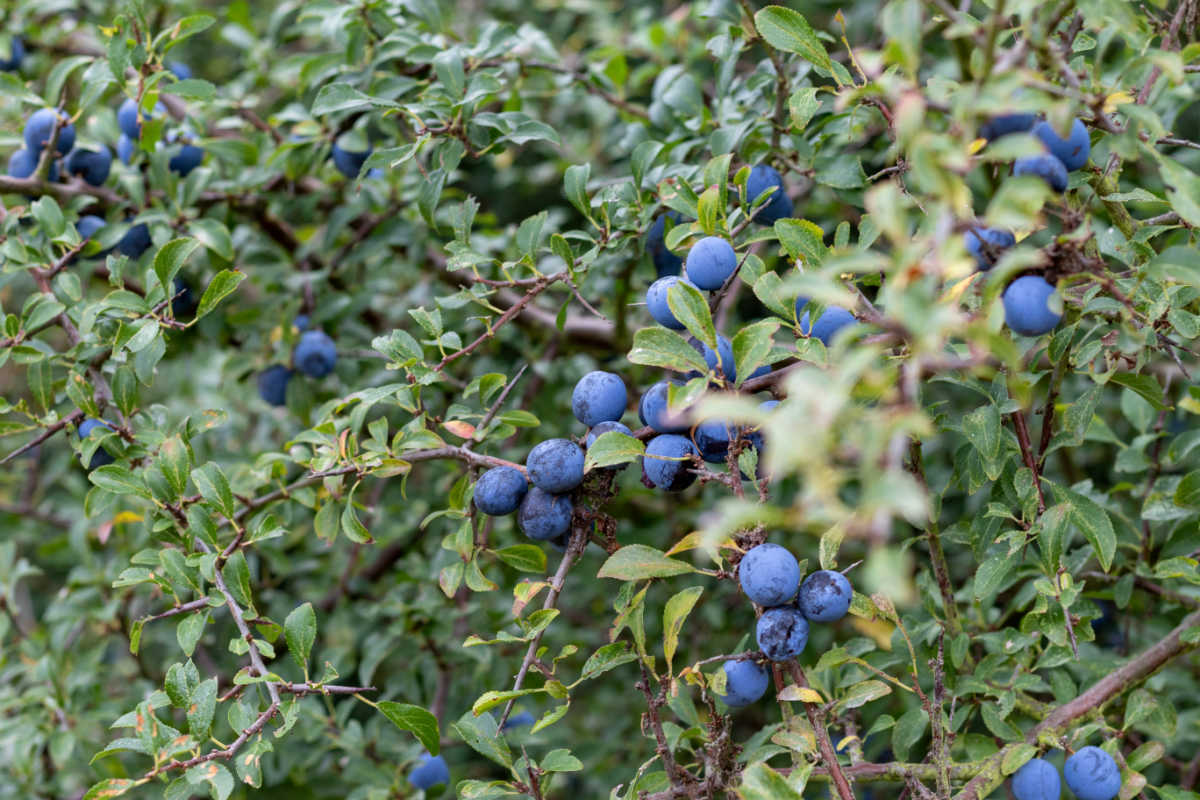
Sloes
Where to find it: Sloes are the fruit of the Blackthorn bush (Prunus spinosa). They are ubiquitous in UK hedgerows, scrubland, and woodland edges.
What to pick: The small, blue-black, berry-like fruits. They look like tiny plums but have a waxy “bloom” on the skin.
How to harvest: Pick by hand when they are dark and slightly soft. Traditional folklore says to wait until after the first frost to sweeten them, but you can pick them anytime in October and pop them in the freezer overnight to mimic this effect.
How to use it: Sloes are too astringent to eat raw (they will make your mouth feel very dry!). They are most famous for making Sloe Gin. They can also be used for jellies, fruit leathers, or “Sloe Port.”
Storage: They keep well in the fridge for a week or can be frozen for months. Freezing actually helps break the skins, which is perfect for infusing into alcohol.
Identification: Blackthorn is a very thorny shrub with dark, almost black bark. The leaves are small and oval. In October, the branches are often laden with the dusty-blue berries.
Caution: Watch out for the long, sharp thorns which can cause nasty infections if they prick you.
Beefsteak Fungus
Where to find it: This distinctive mushroom (Fistulina hepatica) is almost exclusively found growing on the trunks of living or dead Oak trees, and occasionally Sweet Chestnut.
What to pick: The bracket (the shelf-like growth). Look for specimens that are reddish-pink and feel slightly tacky or “fleshy.”
How to use it: Unique among mushrooms, it can be eaten raw in salads (it has a citrusy, acidic tang) or sliced and pan-fried. When cut, it looks remarkably like raw steak, even “bleeding” a dull red juice.
How to harvest: Use a sharp knife to cut the bracket away from the tree. Only take young, fresh specimens; older ones become very tough and overly sour.
Storage: Best used fresh, but will keep in a paper bag in the fridge for 2–3 days.
Identification: A thick, tongue-shaped bracket that is reddish-orange to burgundy. The underside is creamy-white to pale yellow and consists of tiny pores rather than gills.
Caution: Always 100% identify any mushroom before eating. Use a dedicated fungus guide.
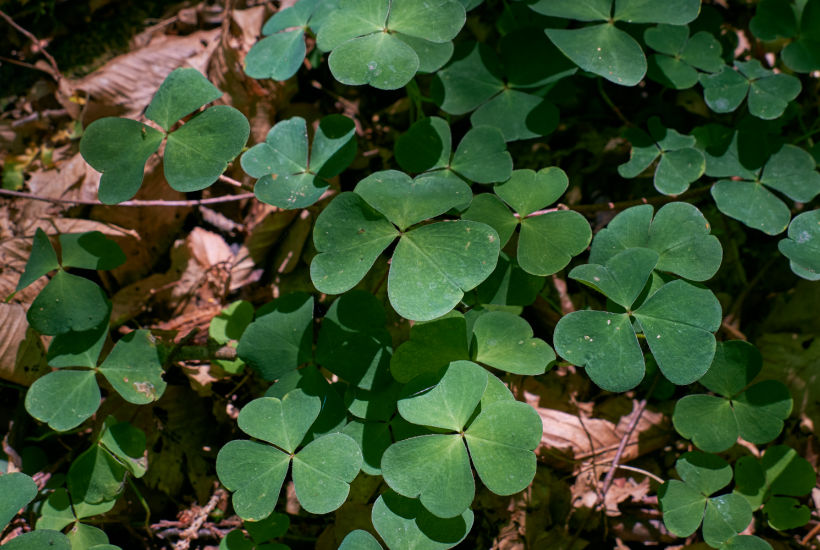
Common Sorrel
Where to find it: Found in grassland, meadows, and along woodland edges. While it starts in spring, October often sees a fresh flush of leaves as the weather cools.
What to pick: The bright green, arrow-shaped leaves.
How to use it: Sorrel has a sharp, lemony flavor due to oxalic acid. It’s a fantastic “citrus” element for salads, or it can be wilted into a classic sorrel soup or sauce for fish.
How to harvest: Pick individual leaves from the base of the plant, choosing the younger, smaller leaves for the best flavor.
Storage: Best eaten fresh but can be kept in a damp paper towel in the fridge for 2 days.
Identification: Look for arrow-shaped leaves with two pointed lobes at the base that point backwards (parallel to the stem).
Caution: Contains oxalic acid, so it should be eaten in moderation, especially by those with kidney issues.
Other plants and fungi in season in October
Milk Cap Mushrooms, Parasol Mushrooms, Oyster Mushrooms, Hawthorn Berries, Crab Apples, Walnuts, Beech Nuts, Rosehips, Sea Buckthorn, Chickweed, Fat Hen, Wood Sorrel, Jelly Ear Fungus, Porcini (King Boletes), Puffball Mushroom, Amethyst Deceiver.
This blog post was originally written on 24 December 2025 and last updated on 24 December 2025


